Why do I have to work to eat?
Why do I have to work to eat?
The title is a quote of a talk while hanging out with friends. One has a cool university job that is immediately
Why do we have to work to eat?
Why do we have to work?

Much of today's work ethics revolve around freeing workers from the pressure. During the pandemic there was a necessary move towards home office work. Company people complained about not having control over their workers. They said they could not see how their workers did their work, when they worked, if they were distracted or taking care of kids, pets, slacking off, if they were even there during office hours, etc.
Again:
They complained about lacking CONTROL over their workers.
Frankly: does it matter when the work is done? Is work, that can sensibly be done from home, that kind of work where it matters if workers are available at any given moment? Is it not enough that the work is done when its results are required? Does it matter when a letter, email, parcel is sent exactly, as long as it arrives when required?
Why do we have to work to EAT?
Let's look at that sentence without the familiarity with a phrase: Work, and you get to eat. If you do not work, you do not get to eat. Not: not get to eat before noon, not the food you want, not at the food place you like. Not eat. At all. Starve. To death, perhaps.
Is this the situation?
No, it's not. At least the Level 4 income countries* do a lot to avoid people starving. They pay for poor people getting food. Volunteers collect leftovers and donations to feed people who have no money to pay for food.
We do this because we understand the consequences of doing nothing of the sort: People starving. Unless they do a job. Any job. Whatever the conditions. If our very existence is at peril, we would do anything – nobody would lie down and die. Would you not do any job, if it fed you? If the alternative was suffering and/or death? Would you not do any criminal activity, do anything to yourself, your loved ones, and certainly anything to people you have no connection to?
* Level 1 - 4 income is the definition that replaced the idea of first to third world. A few decades ago, by the way. It is used by the World Bank, WHO, UN, and others. Not flawless, but still a step up from "third world" as if some countries were a different planet.
And what jobs do we do?
In high income countries, around 80% of the wage-dependent report being happy with their jobs (despite, by the way, less than half being satisfied with what it offers them, and less than 10% being emotionally engaged in their work)*. It gives them structure and pays their bills. They are not the worst jobs, rarely dangerous, mostly sufficient for their livelihood. We hope.
* How do statistics differ so much? Can we trust any? Just some? Well, people are complicated. When asked if you love your work, what do you say? What if the question was if you LIKE your work? And if your society sees unemployment as failure, what do you say then? What, if asked if you're happy with your workhours? Can you turn the answer to that into "happiness with work"? Do you think there's a difference, if you ask middle-aged employees with high pensions, or if you ask gig workers? Maybe the latter don't have the energy to answer a long questionnaire, and so their answer doesn't appear in the result?
But the devil is in this detail: "dependent".
We do jobs where base freedoms are taken away, that under any other circumstances would look monstrous. Perhaps we do expect certain workers to look a certain way, behave a certain way, etc. - but your boss, company, overseer actually demands these things from you: only eat when you are allowed. Only visit the restroom when allowed. Only come and go when allowed. Only express your beliefs if allowed. Be there at a time, for a time, that they decide.
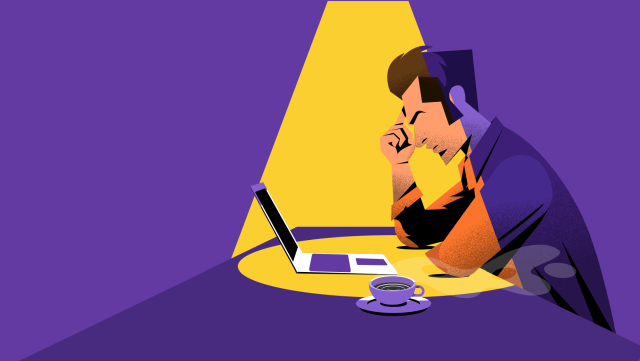
While there, wear the clothes and hair they allow you. In an environment you may have little, if any, control over - its temperature, noise level, smells may well be out of your hands. Whether or not it is detrimental to your health to live that way may be brushed off. After all, you need the job. Otherwise, you cannot eat. Will you really insist on colourfully dyed hair being a human right, if the alternative is starvation? How important is it to you to cover your hair like you want? Can you not really live with the cold room and asthma-inducing colleagues, given the alternative?
Jobs we are supposed to do, so we may eat, are jobs that have been classified as good jobs. Useful jobs. Productive jobs. Creatives are not seen as any of that. If your particular job is in a passion industry – where people are interested in doing their job well – it can happen, if you complain about small income, that others tell you:
That's your fault.
You shouldn't be doing a job that doesn't pay. Just because it fulfills you?
Take note however, that they will happily reap the benefits of the underpaid passion work by consuming art, games, films, music, books, gardening, fashion design, flower arrangement, product package design, sound design of cookies, colour palettes of shopping experiences.
What a productive job is, is usually dictated by the people who offer those jobs. Even if their field has long been outdated, didn't keep up with the times, should have been reformed long ago. And because we need to work to eat, we have no interest in eliminating work by automating it. Even the least humane jobs will remain – shoving things from this side of the table to the other. Sorting. Harvesting. Hard work, repetitive work — mindless work. Human potential wasted.
Lifetimes wasted.
But they need to eat, or that lifetime would be even shorter than it is, after decades of tough physical strain.
And why do we have to work to eat?
Why am I not provided with the means to eat? I must eat. There's is no way around it. Before even other basic needs like a living space, mobility, education, and health care, I must eat. Why is food not simply given to me? As we stated earlier, it IS given to me. But on what terms?
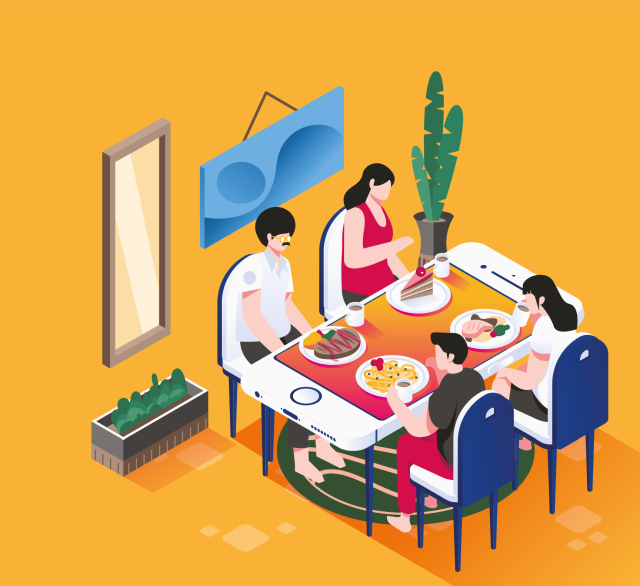
Meanwhile, entire peoples, cultures, countries are left to the idea that unless you work, you will starve. They miss out on progress, and people die before their time because of this stress. And the ugly truth is that there are forces who find this quite agreeable, because they don't have to pay pensions for as long. It's simply the cheapest way, to work people to death.
What else could be done?
I advocate Base Income (BI). We must create systems where people are given everything they need to live, by the system, which is only in place to make sure people are okay. They do no exist for people to support them, but the other way around. If you are breathing, you need money (to eat, among other things), so let's just give people money.
Poor people are only poor because they have no money. Give them money, problem solved.

The inviolability of life is guaranteed anywhere but the poor few countries who still stick to the barbaric practice of death penalty. Not killing me is good, but why not allowing me to live?
The alternative?
We're doing the alternative. If you need things you cannot afford, then you can apply for them at some office or organisation.
This is a bureaucratic effort not everyone can handle. That may not exist in some cases, or not be sensible. That may be actively designed to be insufferable, so applicants DO NOT get what they need. For example, quitting a job may make you not elegible to receive state support for some time. If you quit your job, but weren't equipped to not eat for a few months, you should have stayed on. That your workplace ignored the law, and there was nothing you could do about that, is apparently no reason to quit, but not suffer.
This alternative costs us immeasurable amounts of money, time, workhours, and effort. Half of all lawsuits against wrongly assigned unemployment benefits are successful, clogging up the courts. Offices handle nothing but benefits for children, the elderly, medical care, education, required tools, living space, transport, and a long list of further things. A base income, which any person gets, solves a lot of problems. Children are persons. Elderly are persons. Disabled people are persons. Immigrants are persons, too.

All of them taken care of, with no further check.
Calculations for Germany show that summed up against each other, giving everyone a decent BI practically evens out with the savings in government costs. There's a lot of talk about simplifying the bureaucracy, but apparently not where the disdained unemployed are concerned.
And then, with BI, we would not have to work to eat. What else would happen?
At this point in the discussion, you will hear
"If I was getting BI, I would not go to work at all!"
Alright, let's look at that.

People who suddenly become unemployed are stressed.
Obviously, since they had to work to eat before. But also because they don't know what to do with themselves. Dependent work gives structure. You get up, drive an hour to the work place, stay there for nine hours including lunch break, then drive home fo another hour. Now with eleven more hours per day, and nowhere to put them, they struggle at first. However, if they can eat AND have that time, they find something to fill the hours with.
For one, they relax.
We aren't talking about vacation relaxation forced by cultural expectancy. Not about baking in the sun, slacking off on the couch, or shopping for needless stuff. But about being relaxed as opposed to being stressed. Relaxed people don't (or, less) yell at their family. They have more patience with kids and elders, who can be slow. They can take the time to make good meals, not just convenient ones, and think about their health when cooking. They can exercise because they wouldn't rather spend an available twenty minutes doing nothing, than squats. Relaxed people read and discuss, not just consume. Relaxed people treat their pets with respect to achieve harmony, and their fellow humans even more so. Relaxed people have the will and the time to make commmunication work. Relaxed people don't hit other people, and they don't really mind immigrants because they need not feel that they compete for jobs. If you have what you need, it's easy to be good.
So that person who said they wouldn't work with BI?
They shouldn't.
If the only thing that gets them out of bed in the morning is the sheer existential dread of starvation, then they should stay in bed. That job cannot be worth doing. It should've probably died out with digitisation, or become automated.
If they say it because they work hard, "and others don't", okay, too. If they are stressed to the point, that other people having different work structures makes them petty and vengeful, their job should be restructured or eliminated. BI makes that possible. Just work less. Or don't. People with base income will help jobs die out that nobody should be doing to begin with.
"But people would not work at all. I would. But not anybody else".
This is a wide-spread idea. Everybody else is bad but me. Nobody can be trusted but me. It is simply not true. The so-called Third-person Effect makes us believe that change affects others differently than us. Detach yourself from the idea. Assume that, if you're normal (which is most likely), and other people are normal, then your reaction is probably theirs as well. If you would still go to work, and maybe you'd be more relaxed, or cut hours if you had BI, then quite possibly, others think the same.
Just ask them.

"But we would pay people to do nothing. That's not fair!"
For one, we accept people in our societies who do nothing today, and revere them. They are the rich. They do not have to work, to eat, or for anything else. Taxation shies away from them the world over. They still receive benefits from their governments, of course. They are persons, too. It seems likely that they would continue their way of life, if they got base income on top of their massive means.
Other "lazy" people who wouldn't work if they got BI – do they exist? Let's see.
Why do people not work? Some long-term unemployed are chronically ill. If you have enough medical problems that you can't make it out of the house, you don't work. If you have depression, you can't work under those conditions; if you are autistic, company people are scared of what that means, and reject you. If you're a mother, you don't work because our states propagate natalism, but not childcare. If you're elderly or disabled, you can't do just any work. If you're part of any minority, society may not want your work.
It doesn't mean those people don't want to work.
Deaf people and wheelchair-users would happily work – they are not hired because any tiny problem, that makes them not fit like a cog into a machine, makes them unsuitable in the eyes of company people. It makes no sense that a woman in, say, retail isn't "up to speed" anymore after six months of maternity leave, when any new (male?) employee can apparently start Monday.
The discussion in Germany about cutting any and all benefits to unemployed who are "unwilling to work" (which by the way is not going to hold in court, because the state can in fact not let people not eat just because they don't work) revolves around a just-so five digit number - some 15.000 people who have been classified so. Of 83 million, that's one in 5500, or 0.007 percent. Very likely, we can live with that number of people just doing nothing. We have so far, after all.
And if there are people, if you, really, really, would never, ever work again if you were taken care of - you know what? Don't. If you hate work this much, please, stay away. If you can't stand the idea, then don't.
We can take it. It's okay.
And it's better than having people all over who do bad work, because they detest their jobs so much. We don't need you - and this is not an insult, we can handle things without you. That's the beauty of it.
Those are the main arguments of people opposing base income. Nobody would work; they certainly wouldn't; it's not fair to pay people for doing nothing. Let me clarify, doing nothing is a regular part of many, many jobs. Work to be done is spread over time available. If you only have to write two letters today, you will still be done by the end of the day. And why not, when you weren't allowed to leave earlier anyway.
What else?
• "Innovation would stop". Pushing the envelope isn't done by people in existential dread, ever. It's hard to understand for people who are not used to working creatively, but ideas need quiet to bloom. True innovations need relaxed people, so they can do their best, instead of their fastest and most easily sold.
• "Nobody would do hard work". There is plenty of hard work that's totally doable for fewer hours. Not eight hours of garbage collection or elder care, but four. Work that is fulfilling and emotionally engaging, but draining when done under too much pressure. Do we want people to teach kids only because they need to eat? Take care of our teeth, paint walls, drive buses, because they have no other choice? What if they chose to, because they really love doing that work?
• "It would destroy families". A legend persists from an early experiment in the US that divorce rates were rising due to BI. For one, this did not happen. And then... if women only stay with their men because they have to eat — is that a world we want?
• "Immigrants will come to get free money". See above. Let them. Immigrants come to a country that gives them things their homeland does not have, like security, low child mortality, or non-fudged elections. Probably a nice bonus if they also don't starve. Imagine though if, say, France made BI a reality tomorrow? Would you emigrate to France? What if Tobago did? Can you even find that on a map? Maybe it's not too interesting, to go to a country where you know nobody*, even if you get money? There will not be a movement of four billion people to one country, no matter how cool it is. There's more than money to life. Hopefully the first to hand out general BI would set a positive example for others to follow.

* Open borders would be the next subject. Nothing better can happen to a country than immigration; there are no more law-abiding, hard-working, culturally accepting citizens than immigrants. Those are the people who innovate. Any time you hear someone making progress anywhere in the world: that could have been here, where you live! IF you allow people in, instead of being upset what they will say about that traditional dish that nobody likes anyway, and embraced their holidays as hooray! more holidays, instead of being sceptical or ignorant what is celebrated.
Why do I HAVE to work to eat?
There is no reason why I should have to. But I am given reasons. I should not be rewarded for being lazy, but punished for not meeting numbers; I should be productive, but not at home where nobody sees; I should be controlled, if I really am useful enough to society that it allows me to live.
That's why.
Why is, because company people have no trust in others. Why is, because we are so used to being punished, that we take pride in surviving it, and want others to be punished, too. Especially if their disservice seems greater than ours.
We have to work to eat because it's about authoritarian figures not wanting to give up their place, because they believe rights are pizza and there aren't enough slices to go around. Because people — regular people, who will never be winners in this scenario — still believe the fairy-tales that ill-willing neoliberals push on us: "People are greedy and selfish. They must be controlled. They will always work only to their own benefit." What then about the untold numbers of people who work for free? Coach a kids' sports team, keep a public book exchange running, help refugees, walk dogs for their neighbours, reforest, educate, transport, heal, keep company, save lives? What's their payment? Not money.
This zine is a rant in April 2025. My German home country has recently elected a conservative adminstration under a millionaire as designated chancellor, who can be quoted with: "Four-day weeks and work-life-balance will not produce wealth. We need to work more.", who has made the parliament agree to striking a national holiday from the calendar before even being instated, and who wants, despite this being highly unlikely to survive in court, punish unemployed by taking any support from them. All 15.00 of them — or 30.000, if you feel like pushing the numbers up to 0.01% of the population.*
The current zeitgeist likes strong men, who put their foot down. I don't want that.
Because it's always the altruists who are under that foot when it comes down.
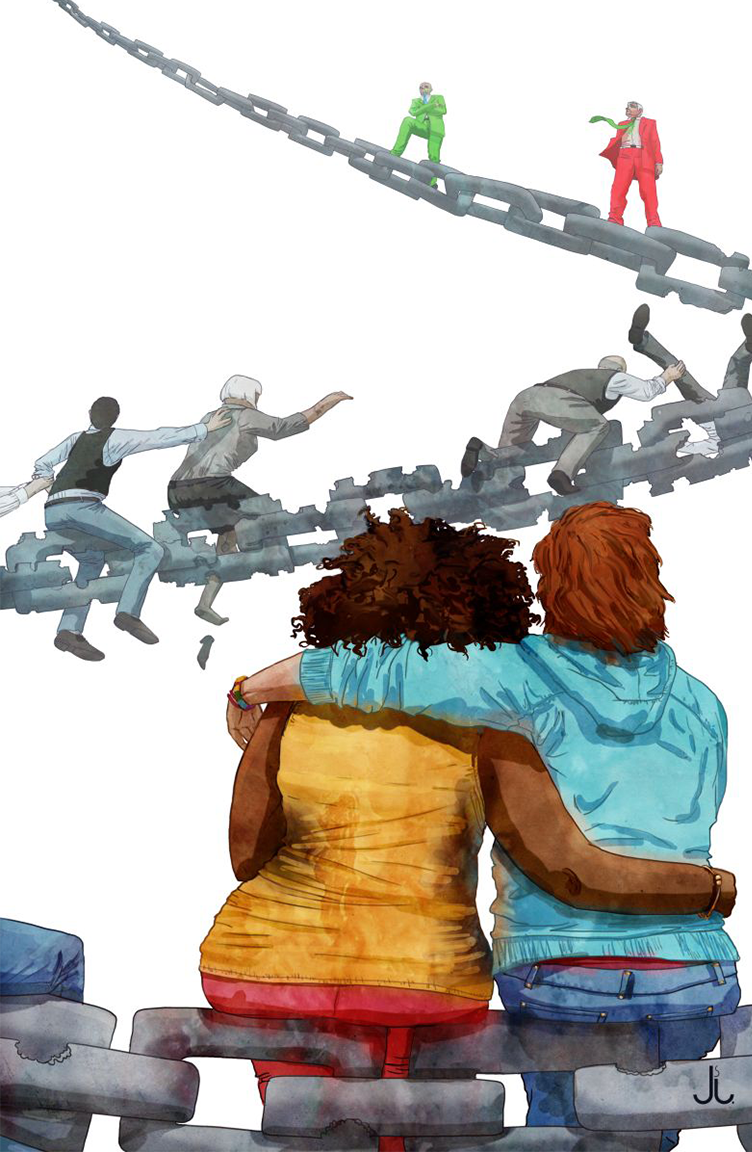
We can all achieve so much together. We are not apart, there is no us or them and no those upstairs and us down here. There's room for all of us on the same step. I am part of everyone, and if everyone is well, so will I be. And you, too.
* But absolutely no tax increases for the rich. Ever. At all. Why is that?
Credits
This zine, its code and writing, is published under CC-0, non-commercial, non-derivative licence. I hope it will help with arguments for base income, and against living only to work. Share, embed, post, print, contest, discuss! I shortened unfairly, made things look overly rosy, simplified, attacked, and backed unfinished ideas. Everything in here requires more discussion. It is not weak to only say no or yes, there is merit in looking at things from different angles.
Life IS not simple, and simple answers do not do it justice!
Writing, layout, cover art: Jennifer S. Lange
Image credits:
Food icons via blush.design
Work illustrations by Storyset
Work illustrations via Reshot
Created for FUCK CAPITALISM JAM 2025