Potatoes

All about potatoes

Breakfast, lunch, or dinner. It's potatoes all the time around here!

The Potato: your humble, nutrient-dense vegetable.

Everything you need to know about potatoes:

Explore the variety of and the .

Dig into or discover the best ways to store potatoes by checking out the storage guide.

Learn fun history facts about potatoes and get answers to the most frequently asked potato questions.

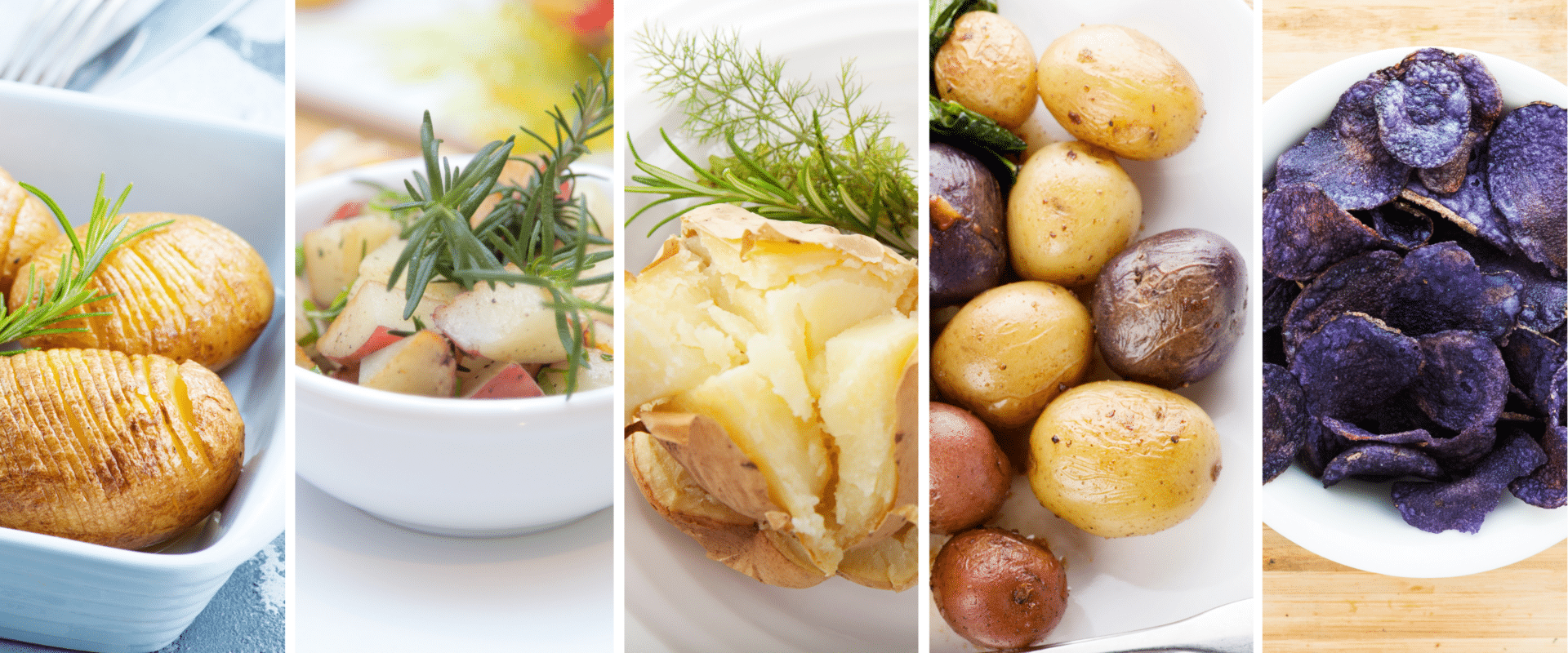
Classic tater dishes:

~~~~~ Get to know Potato History ~~~~~

The Origin of Potatoes

Today, the potato is America's favorite vegetable, but the origin of potatoes began far away from the United States. Where did potatoes originate? The Inca Indians in Peru were the first to cultivate potatoes around 8,000 BC to 5,000 B.C. Potato History: The ancient civilizations of the Incas used the time it took to cook a potato as a measurement of time. While they spread throughout the northern colonies in limited quantities, potatoes did not become widely accepted until they received an aristocratic seal of approval from Thomas Jefferson, who served them to guests at the White House. Thereafter, the potato steadily gained in popularity, this popularity being strengthened by a steady stream of Irish immigrants to the new nation.

Potato Life Cycle

Potatoes are grown as annual plants. Depending on the climate, potatoes are planted and harvested at different times of the year. For example, in the northern United States, fields are typically planted in the spring and harvested in the fall. The part called a “potato” grows underground. The potato grows on a specialized underground stem called a stolon. So, although potatoes grow underground, they are stems, not roots, and are known as “tubers.”

Fun Potato History Fact

Did you know: In October 1995, the potato became the first vegetable to be grown in space. NASA and the University of Wisconsin, Madison, created the technology with the goal of feeding astronauts on long space voyages, and eventually, feeding future space colonies.

More Fun Potato Facts

Yes! potatoes and tobacco are indeed in the same plant family, called Solanaceae, also known as the nightshade family. This family includes a variety of plants, both edible and poisonous, such as tomatoes, eggplants, peppers, and even deadly nightshade (Atropa belladonna).

One of the differences is that while potatoes are tubers, sweet potatoes are the enlarged roots of the sweet potato plant, known as root tubers. Sweet potatoes belong to Convolvulaceae, the same family as morning glory.

Score: 0

Types of Potatoes

Learn about the different types of potatoes and how to prepare them.

How many types of potatoes are there?

There are more than 200 varieties of potatoes sold throughout the United States. Each of these varieties fit into one of seven potato type categories: russet, red, white, yellow, blue/purple, fingerling, and petite. Potatoes can be used to fuel the body and the brain throughout the day. Easy to prepare and pair with a variety of cuisines, potatoes lend themselves to convenient meal prep to fuel you throughout the week. They can be whipped together with a few healthy ingredients and ready to serve under 30 minutes for a delicious meal.

Growing and Harvesting Potatoes

Learn about the process of growing and harvesting potatoes.

Potato varieties

Russet Potatoes

Russets are ideal for light and fluffy mashed potatoes. They also fry up crisp and golden brown, and are the potato of choice for baking. The delicate flavor and fluffy texture of baked russets goes well with a variety of toppings, from traditional sour cream and chives to spicy and bold Mediterranean or Latin flavors. Try cutting into planks or wedges to make delicious homemade fries.

Red Potatoes

Because of their waxy texture, the flesh of red potatoes stays firm throughout the cooking process. Their thin yet vibrant red skin adds appealing color and texture to side dishes or salads. Reds are frequently used to make potato salad or add pizazz to soups and stews, but can also be served baked or mashed. Round reds are often referred to as “new potatoes,” but the term “new” technically refers to any type of potato that is harvested before reaching maturity.

White Potatoes

White potatoes hold their shape well after cooking. Their delicate, thin skins add just the right amount of texture to a velvety mashed potato dish without the need for peeling. Grilling whites brings out a more full-bodied flavor. Try adding potatoes to your salad by tossing cooked white potatoes into your Caesar or a creamy garlic parmesan dressing.

Yellow Potatoes

Grilling gives yellow potatoes a crispy skin that enhances the dense flesh, creating a slightly sweet, caramelized flavor. The naturally smooth buttery texture makes delicious baked, roasted, or mashed potatoes. Simmer yellow potatoes until fully cooked, drain, chill, and gently “smash” into flat disks. Brown these in oil or clarified butter and serve as a side or appetizer. Then top with a garnish of your choice.

Purple Potatoes

Most blue/purple potatoes have moist, firm flesh that retains its shape while adding rich, vibrant color and luscious taste to salads. The purple color is preserved best by microwaving but steaming and baking are also great ways to cook purple potatoes. Because of their mild yet distinctly nutty flavor, blue/purple potatoes naturally complement green salad flavors. Red, White, and Blues—Combine blue potatoes with whites and reds in salads or roasted medleys to make all three colors “pop”.

Fingerling Potatoes

Fingerling color and shape are a welcome visual addition to any dish. Pan-frying and roasting enhances their robust flavor and showcases their wonderful nutty or buttery tastes. Consider fingerlings as a change-of-pace foundation for a unique potato salad. Split fingerlings lengthwise and oven-roast to serve as a small-plate or side-dish alternative to fries. Accompany them with a flavorful dipping sauce, like spicy ketchup, romesco, or sriracha mayo.

Petite Potatoes

Roast a combination of colors for an eye-catching side dish. Petites concentrated flavors and quicker cooking time makes them a good choice for potato salads. You can also toss petite potatoes in olive oil, rosemary, and salt and pepper to make colorful, delicious, and fun roasted potatoes. Petites save on prep time because they can be prepared and served whole without slicing or chopping.

How To Cook Potatoes

Tips and tricks to make potatoes.

What Is the Best Method for Cooking Potatoes?

Potatoes are an incredibly versatile and nutrient-dense vegetable that you can cook in various ways to suit your taste and mood. There's no single best way to make potatoes—baked, roasted, mashed, fried, they are all delicious. Potatoes also provide the energy, potassium, and vitamin C you need to fuel your day.

These are some of our favorite ways to prepare and enjoy potatoes:

  • Baking russet potatoes produces a fluffy interior with crispy skin.
  • Roasting yellow potatoes enhances their flavor and texture while providing a crispy exterior.
  • Air frying petite potatoes is a quick and convenient way to cook them.
  • Mashing russet potatoes makes for a fluffy favorite; yellows, whites, or reds make for creamy, crowd-pleasing mashed potatoes.
  • Incorporating all types of potatoes into soups and stews creates a hearty and filling meal.

Preparing Potatoes for Cooking

Due to the numerous ways potatoes can be prepared, they're great as an entrée or side dish for breakfast, lunch, dinner, and snacks in between! While every style of potato dish has a unique cooking process, there are certain best practices you should follow no matter the cooking method. Here’s how we recommend preparing potatoes to achieve the best results:

Before starting any potato preparation:

  • Store potatoes in a cool, dark place (there's no need to refrigerate them)
  • Cut away green spots and sprouts
  • Thoroughly wash your potatoes

To peel or not to peel?

This question mostly comes down to personal preference. Even with the skin removed, a potato retains most of its nutrients. More than half of the nutrients are contained within the potato itself, so you’ll still get potassium and vitamin C if you like your potatoes without the skin.

Keep the following tips in mind when considering whether to peel the skin before cooking potatoes:

  • Roasted potatoes can get crispier without the skin (follow this recipe to make the ultimate crispy roasted potatoes). However, if you prefer the flavor and texture of potato skin, keep it on.
  • Many people prefer mashed potatoes without the skin because they have a smoother, more uniform texture. Others like mashed potatoes with the skin. If you’re the latter, dice your potatoes into small pieces to avoid overly large chunks of skin in your mash.
  • Pro tip: For extra crispy skin on baked potatoes, dunk them in a saltwater mixture before baking.

How-To: Classic Potato Recipes

How-To: Baked Potato

How to Make the Perfect Baked Potato - Crispy on the Outside, Light, and Fluffy on the Inside. The perfect baked potato has a crispy exterior, speckled with grains of salt, and a light, fluffy interior, kissed with a touch of butter. It's a tried-and-true classic as a side for steaks and pork chops. It can also be topped with just about anything you like for a complete meal. You can achieve this level of baked potato perfection at home! Our comprehensive guide on baked potatoes includes the steps to make the perfect baked potato at home.

Recipe:

How-To: Mashed Potatoes

How to Make the Ultimate Light and Fluffy Mashed Potatoes. Mashed potatoes are a staple at holiday meals and a perfect complement to a weeknight dinner. Whether you keep them simple or dress them up with added flavors, mashed potatoes are always a hit. Follow our step-by-step instructions, with tips and tricks, to learn how to make the perfect mashed potatoes.

Recipe:

How-To: French Fries

How to Make the Ultimate Crispy and Golden French Fries. French fries are a classic side dish and the perfect complement to a burger, a sandwich, or as a snack all on their own. Whether you keep them simple with a sprinkle of salt or dress them up with flavorful toppings, fries are always a hit. Follow our step-by-step instructions, with tips and tricks, to learn how to make the perfect homemade French fries.

Recipe:

How-To: Roasted Potatoes

How to Make Craveable and Crunchy Roasted Potatoes. Roasted potatoes are an easy addition to any meal! Level up your roasted potatoes with our tips to help you make them extra flavorful and crispy. Explore our comprehensive page on roasted potatoes for information on selecting the right potatoes, whether or not to peel the skin, and the best roasted potato recipe.

Recipe:

How-To: Potato Chips

How to Make Crispy and Irresistible Potato Chips. Homemade potato chips are the perfect crunchy treat! Level up your snacking with our tips to help you make them extra crispy and flavorful. Explore our comprehensive page on potato chips for information on selecting the right potatoes, slicing techniques, and the best seasonings for a perfect batch.

Recipe:

How-To: Scalloped Potatoes

How to Make Creamy Scalloped Potatoes. Similar to au gratin potatoes, scalloped potatoes are a preparation that features layers of sliced potatoes baked in a delicious cream sauce. This dish provides an elegant addition to any meal, and with our tips, it can be quick and easy to make. Impress your friends and family with these scalloped potatoes..

Recipe:

Your Guide to Potato Nutrition

NutritionIntro

Potato Nutrition

We need to eat carbohydrates every day because they are important for optimal physical and mental performance. But, not all carbs are created equal. While “good carb” isn’t defined in the dictionary, this carb is hard at work helping our brains and bodies perform their best, curbing cravings and fueling activity, whether we're working out or just getting through the day. With potatoes you get the energy, potassium, and vitamin C you need to fuel you.

Potatoes come in multiple varieties to keep your meals interesting. Russets, reds, yellows, whites, purples, petites, and fingerlings. Potatoes also come in multiple forms to fit your cooking methods: fresh, dehydrated, frozen, and canned. Their versatility means they can easily fit into meals across various personal, cultural, and dietary preferences.

Potatoes are more energy-packed than any other popular vegetable. Potatoes are also fat-free, gluten-free, plant-based, affordable, and a quality carbohydrate. They are cholesterol-free and sodium-free, with only 110 calories per 5.3oz serving. Based on the 2020-2025 Dietary Guidelines for Americans (DGAs), potatoes can help Americans of all ages follow a healthy eating pattern. By choosing potatoes, Americans can take simple steps toward eating healthier across every stage of life.
Potato Nutrition Highlights

A medium 5.3 oz skin on potato has 27 mg of vitamin C per serving, which is 30% of the daily value. Potatoes are considered to be an excellent source of this antioxidant. Vitamin C aids in collagen production—a major component of muscle tissue—and supports iron absorption.

A medium 5.3 oz skin on potato has 620 mg of potassium per serving, which is 15% of the daily value and more than a medium-sized banana (422 mg per serving). Potassium is an electrolyte essential for muscle functioning. Potassium is lost in sweat, so it needs to be replenished for optimal performance.

A medium 5.3 oz skin on potato has 0.2 mg of vitamin B6 per serving, which is 10% of the daily value and considered to be a good source. Vitamin B6 plays important roles in carbohydrate and protein metabolism.

A medium 5.3 oz potato with skin-on provides 26 grams of carbohydrates, or 9% of the daily value per serving.

Get the Facts About Potatoes

Myth Starchy foods don't contain many nutrients

Fact Potatoes are a nutrient-dense vegetable

Myth All of a potato's nutrients are in its skin

Fact The majority of a potato's valuable potassium and vitamin C is found in the flesh

Myth Potatoes are empty calories

Fact Potatoes contain carbohydrates to fuel, 2 grams of fiber, and 3 grams of plant-based protein

Myth Only fresh produce is good for you

Fact Fresh, frozen, and dehydrated potatoes are all optimal vegetable choices that contain nutrients

Myth Sweet potatoes are more nutritious than white potatoes

Fact Both white potatoes and sweet potatoes are nutrient-dense vegetables