💡 Pro Tip: Look for "Signature Moves". If you see two parallel runways stretching endlessly into a desert, check for Dubai or other Middle Eastern hubs. If you see runways crossing in a star shape, think Europe or older US airports.
1. Anatomy of an Airport
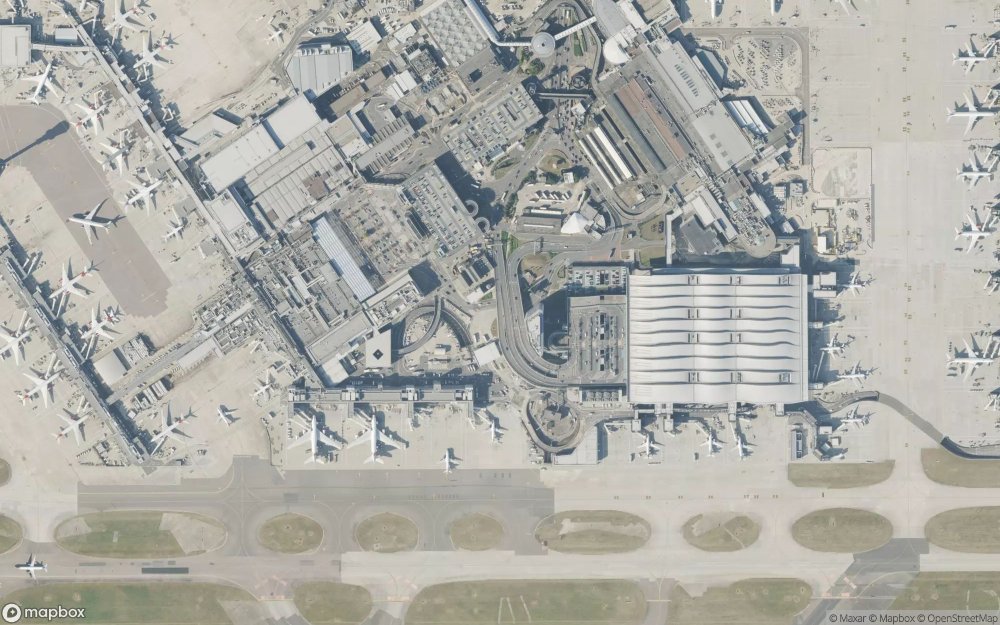
Before identifying specific airports, you need to know what you're looking at. Airports have massive footprints visible from high orbits.
Long, straight, dark or light grey strips. They have numbers painted on the ends (e.g., 09/27). Major international hubs usually have at least two lengthy parallel runways.
Cluster of buildings where aircraft park. Look for "piers" or "arms" sticking out with airplanes (white dots) parked around them.
2. Terminal Types: The Clues
The shape of the terminal is often the biggest giveaway for identifying a specific airport.
Main check-in building connected to separate "satellite" buildings (often by underground train).
Examples: Atlanta (ATL), Madrid (MAD T4S).
One long main building with finger-like piers sticking out.
Examples: Hong Kong (HKG),
Amsterdam (AMS).
Curved terminals designed to allow cars to drive up to gates (an older idea).
Examples:
Dallas/Fort Worth (DFW), Paris (CDG T1).
3. Detective Strategy: The Star vs The Parallel
Use runway orientation to rule out options immediately.
-
⭐
The Star / Cross (Older Design): Runways crossing each other to handle wind from any direction. Common in older, space-constrained airports like Chicago O'Hare or New York JFK.
-
🛗
The Parallel Giant (Modern Hub): Massive parallel runways that never touch. Allows simultaneous landings. Common in newer mega-hubs like Atlanta, Los Angeles, or Dubai.
4. Terminal Architecture Patterns
Terminal design reveals airport size and era of construction.
Single long building with gates on both sides (older design). Examples: JFK Terminal 4, older sections of Heathrow. Efficient but limits gate count.
Central terminal with fingers extending outward (modern design). Examples: Chicago O'Hare, Atlanta, Dubai. Maximizes gates while keeping walking distances manageable.
Terminal buildings separate from main structure, connected by automated trains. Ultra-modern hubs: Munich, Kuala Lumpur. Visible as circular or geometric buildings islands between runways.
5. Hub vs Regional Airport Differences
Major international hubs have telltale features at orbital level.
-
🌍
Hub Markers: 4+ runways, massive terminal complexes, dedicated cargo areas (warehouses + parking for trucks), hotels visible nearby, multi-level highway interchanges for access.
-
🛩️
Regional Markers: 1-2 runways, small terminal building, minimal taxi ways, parking lot size proportional. If you can count individual cars easily, it's regional.
6. Military vs Civil Airports
Military bases have distinct features that distinguish them from commercial airports.
⚔️ Military Airport Clues:
Hangars: Massive rectangular buildings with curved roofs (aircraft storage). Civil airports have smaller, scattered maintenance hangars.
Aircraft Parking: Fighter jets park in neat rows (tiny from space). Commercial planes park at gates.
Revetments: Protected concrete shelters for military aircraft (look like U-shapes or half-circles). Never seen at civil airports.
Perimeter: Military bases show extensive security fencing, often with visible patrol roads.
Ready for takeoff?
✈️ Play Airports QuizLearn more about Airports • Browse all Airports locations ✈️