💡 Pro Tip: Look at the shadow cast by the stadium. A flat image can deceive, but a long shadow reveals structures like the famous Arch of Wembley or the pointed roof sections of other modern arenas.
1. The Shape Test: Oval vs. Rectangle
The overall footprint of the stadium tells you what sport is played there, which often reveals the country.
Stands are close to the pitch. Sharp corners. No running track.
Likely: UK, Spain, Germany
(Football specific).
Curved ends to accommodate a running track. Much larger footprint.
Likely: Olympic
Stadiums, Italy (Serie A often has tracks), or AFL (Australia).
2. The "Gridiron" Giveaway (USA)
American Football fields are the easiest to spot from space if the resolution is high enough.
Look for the dense horizontal striping of yard lines (every 5 yards). A soccer pitch is mostly green with just a center circle and box lines.
NFL stadiums are massive. They often have huge parking lots surrounding them (a sea of grey asphalt), unlike European stadiums often embedded in cities.
3. Detective Strategy: Roof & Shadow
Modern stadiums are defined by their roofs. Use this to identify specific famous venues.
-
🍩
The Open Donut: A circular roof with a hole in the middle. Classic design (e.g., Maracanã, Rome Olympic).
-
🔵
The Closed Dome: A solid white or grey blob with no grass visible. likely a US indoor arena (Superdome) or a retractable roof closed.
-
🌈
The Arch: If you see a thin white line casting a huge shadow across the stadium, it's Wembley Stadium (London). It's unique.
4. European vs American Stadium Design
Continental differences in stadium architecture are visible from space.
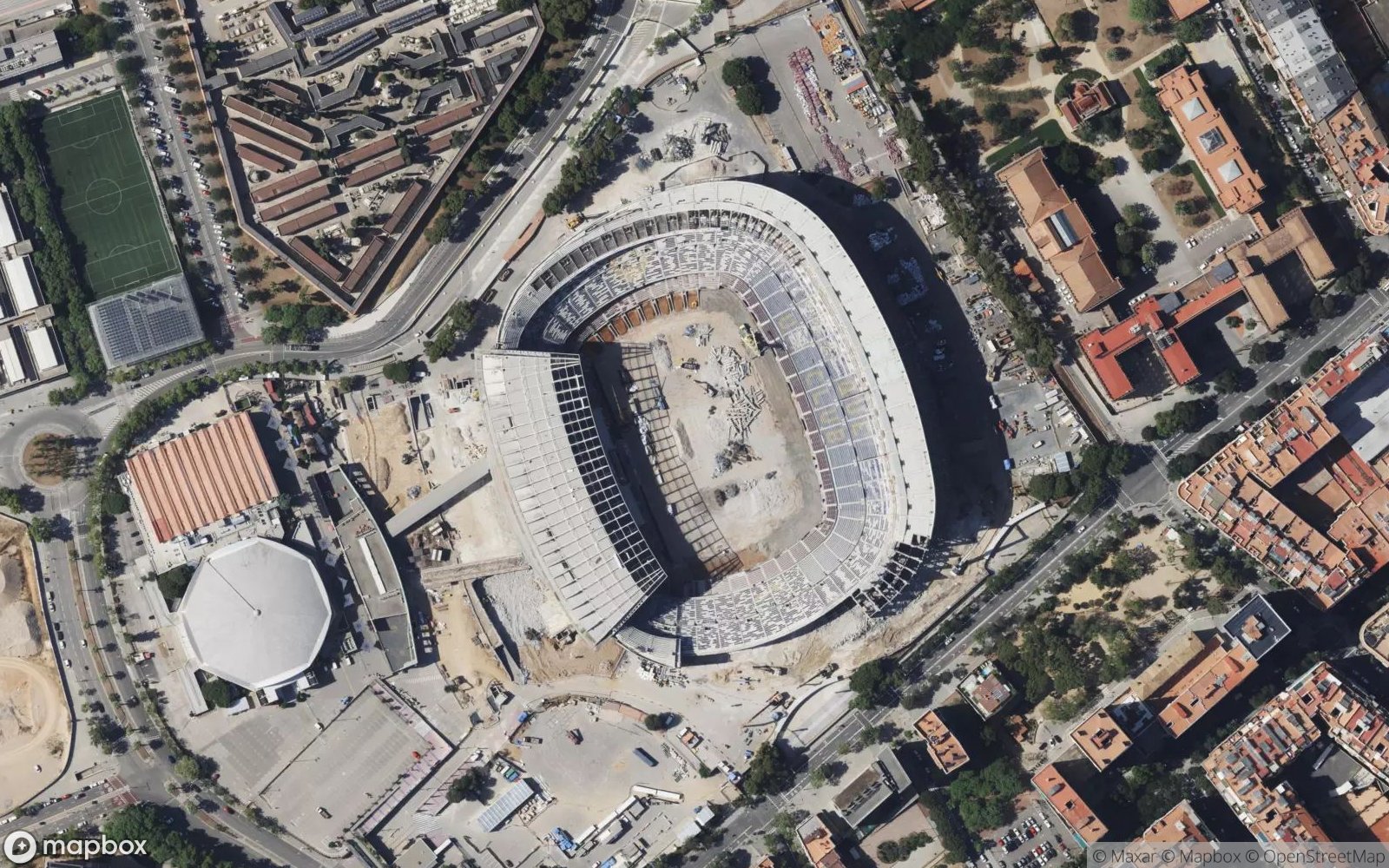
Tightly integrated into urban fabric. Minimal parking (fans use metro/train). Steep, tall stands creating imposing profiles. Often asymmetric due to space constraints. Examples: Camp Nou, Old Trafford.
Surrounded by massive parking lots (tailgating culture). Lower, wider bowls. Perfectly symmetric. Often in suburban locations with highway access. Examples: AT&T Stadium, MetLife Stadium.
5. Historic vs Modern Stadium Markers
Age reveals itself through design and integration.
-
🏟️
Historic Markers (50+ years): Visible concrete pillars/structure, asymmetric stands (added incrementally), integrated into dense neighborhoods, minimal modern amenities visible. Examples: Wembley (old), San Siro.
-
🔵
Modern Markers (post-2000): Sleek rooflines, retractable roof mechanisms visible, perfect symmetry, LED panels (appearing as lighter rectangles), surrounding development (restaurants/shops). Examples: Mercedes-Benz Stadium, Tottenham Hotspur Stadium.
6. Roof Types Quick Guide
The roof tells you everything about climate, league, and era.
☂️ Roof Recognition:
Open-air: No roof structure visible. Warm climates or traditional European football. The pitch is fully exposed.
Partial Canopy: Roof covers stands but not the pitch. Common in modern stadiums (Allianz Arena, Emirates).
Retractable: Look for tracks or support structure. High-tech hubs: Arizona, Dallas, Toronto.
Full Dome: Completely covered. Harsh climates (Minnesota, Detroit) or multi-purpose venues.
Ready for Kickoff?
Learn more about Stadiums • Browse all Stadiums locations 🏟️