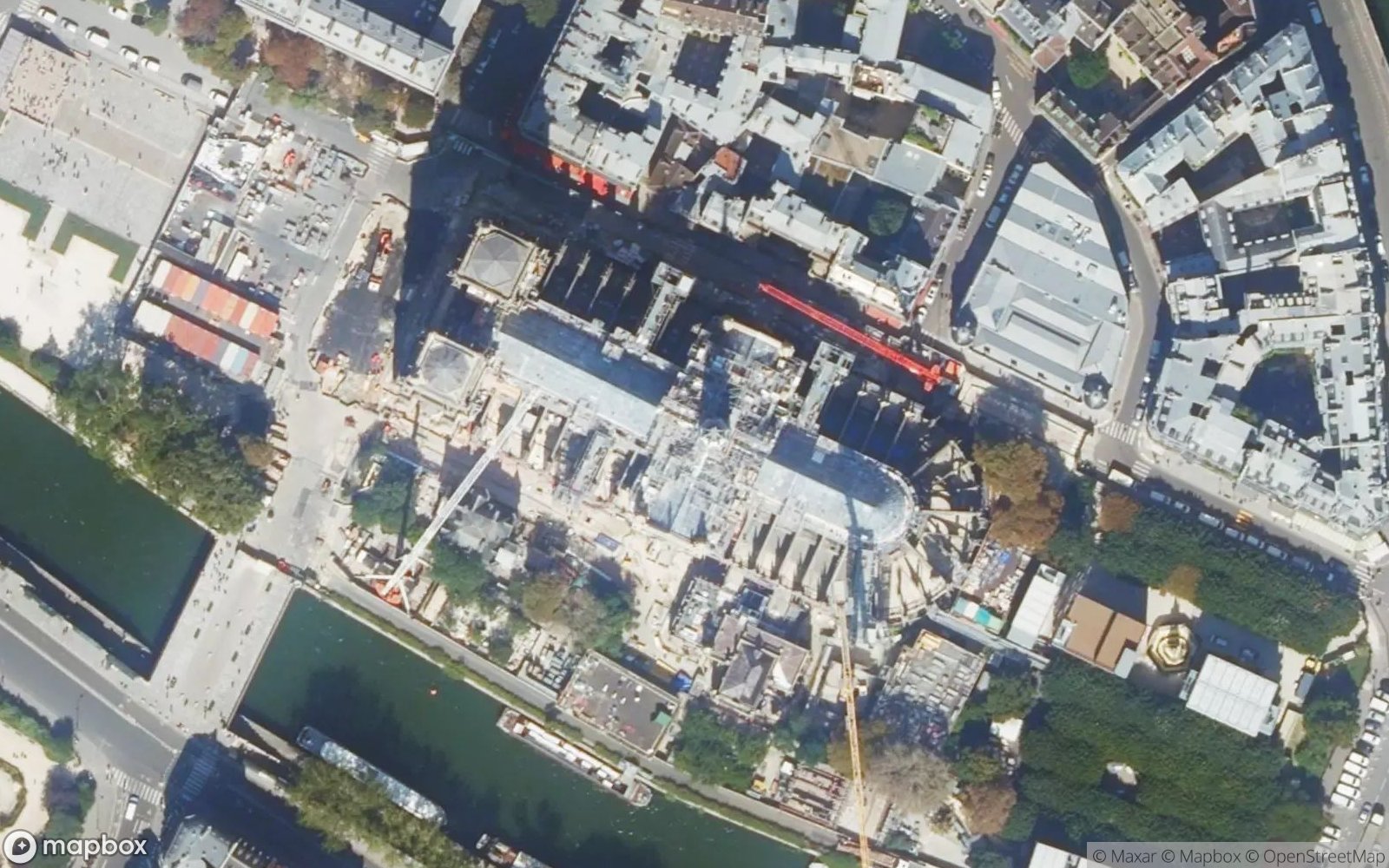
About Notre-Dame
Notre-Dame de Paris (meaning "Our Lady of Paris"), referred to simply as Notre-Dame, is a medieval Catholic cathedral on the Île de la Cité (an island in the Seine River), in the 4th arrondissement of Paris. The cathedral, dedicated to the Virgin Mary, is considered one of the finest examples of French Gothic architecture. Its pioneering use of the rib vault and flying buttress, its enormous and colorful rose windows, and the naturalism and abundance of its sculptural decoration set it apart from the earlier Romanesque style.
Construction began in 1163 under Bishop Maurice de Sully and was largely completed by 1260, though it was modified frequently in the following centuries. In the 1790s, during the French Revolution, Notre-Dame suffered extensive desecration; much of its religious imagery was damaged or destroyed. In the 19th century, the coronation of Napoleon I and the funerals of many of the French Republic's presidents took place at the cathedral.
The publication of Victor Hugo's novel "Notre-Dame de Paris" (The Hunchback of Notre-Dame) in 1831 inspired popular interest in the cathedral, which led to a major restoration project supervised by Eugène Viollet-le-Duc. On 15 April 2019, while the cathedral was undergoing renormalization and restoration, a fire broke out in the roof space of the cathedral. The fire burned for around 15 hours and sustained serious damage to the cathedral, destroying the flèche (the timber spire over the crossing) and most of the lead-covered colandered wooden roof above the stone vaulted ceiling.
Play Landmarks Quiz 📖 Read More 🗺️ Google Maps 📘 Landmarks Guide