Great amp modeling used to live at two extremes: premium modelers
priced well beyond what most working musicians could justify, and DIY
Raspberry Pi rigs that sounded great but demanded serious technical
know-how to build and keep running.
COFFEE AMPS started as a bet that the space in between was worth building for —
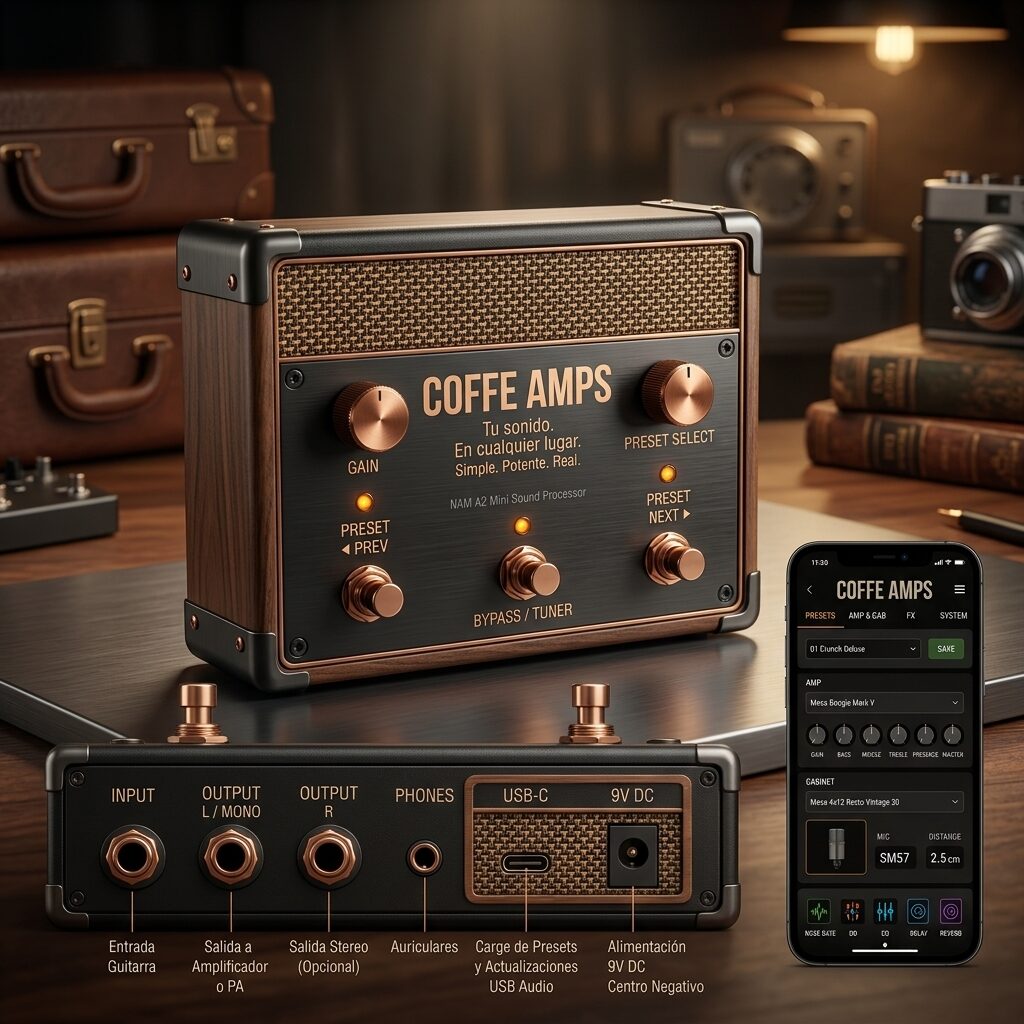
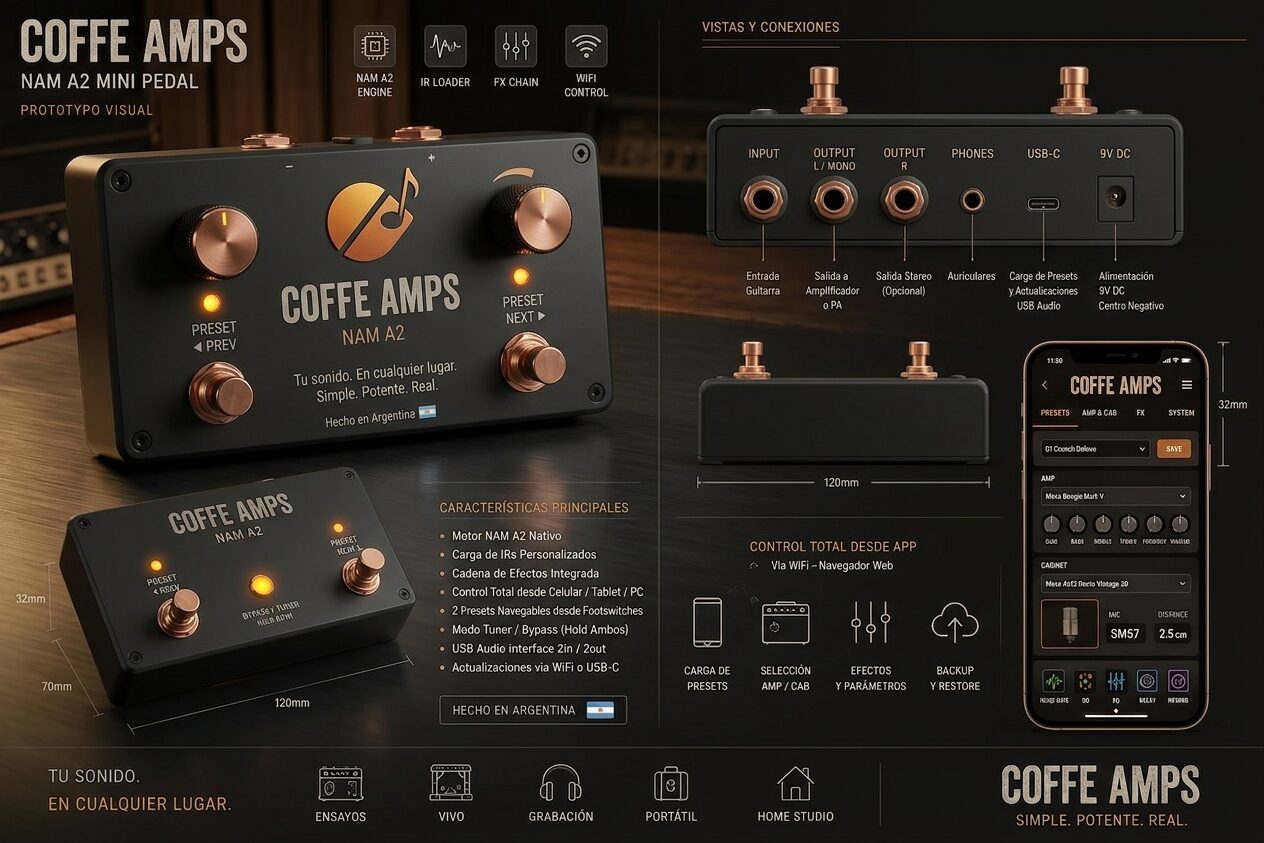
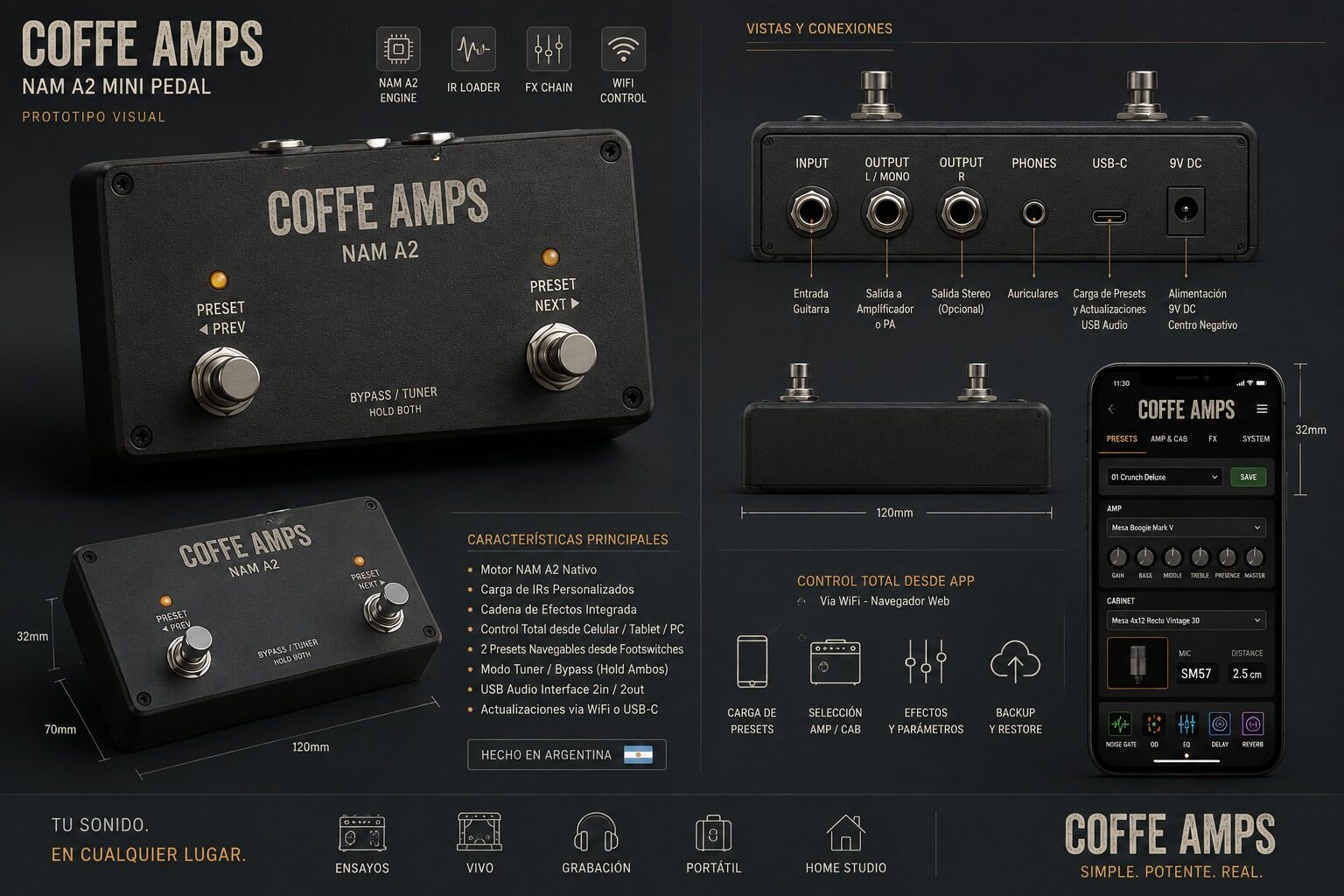
open neural modeling technology, packaged into hardware that feels like a real
instrument rather than a science project. No screens to dig through, no terminal
windows on stage: just two footswitches, a companion app, and studio-grade tone.
The name is a nod to where the idea actually took shape — late nights, strong
coffee, and a shared conviction that a small team in Argentina could design,
prototype and manufacture something genuinely their own.
Prototype 0.1
A Raspberry Pi 5 running PiPedal and the NAM A2 engine, wired to a basic USB audio interface — proof that the tone and latency were worth chasing.
Validation
Stress-testing latency, CPU load, thermal behavior and preset switching until the rig held up through a real rehearsal, not just a bench test.
Enclosure & Controls
Moving off the breadboard into a proper chassis, footswitches and an isolated 9V power stage — the first unit that looked like a product.
Custom Hardware
A dedicated PCB, an embedded MCU platform, and a growing lineup — built to be repaired, updated and manufactured locally for years to come.