A compilation of data and opinion
Produced by Epistolary Richard and with contributions from Austin Ramsey, Charlie Etheridge-Nunn, Chloe Mashiter, Chris McDowall, Fiona Howat, Gabriel Kerr, Jon Starshine Greenall, Josh Fox, Lloyd Gyan, Logan, Nate Magnuski & Richard Sullivan, Nem Ginty, Paul Beakley, Rach Shelkey, Ramanan Sivaranjan, Randy Lubin, Robert Carnel, Ryan Howard, Sean Smith, Sharang Biswas, Thomas Manuel, Yeonsoo Julian Kim
Why have I compiled this? Two reasons. One, ever since I got back into tabletop roleplaying games as an adult, I’ve been interested in trying to wrap my head around the hobby. What are the hottest new games? What are the shifts in design and production? How the games are made and how they’re played? Where did those trends come from and where are they going? Who is out there designing games? What play communities are they from? Every year I seemed to have a new revelation just as to what was going on around me. I wanted to know and so I asked people whose opinion I valued and I wrote down what they said (or they emailed me and I could just copy paste it). And because I figured that other people may also be interested, I’ve compiled it together here so others can read it as well.
So the first reason is to record what I’ve learned. The second reason is to try and inspire others to do the same.
I would really like a better version of this document to exist. One that’s more comprehensive, more detailed, more balanced, more accurate. One that’s put together by people with more time, ability, resources and connections than I have. Not even that (though that would be great), I would really like to read something like this written by anyone who has a different perspective, different contacts, different data or analysis than I have. I really hope this document helps encourage others to create their own. If it does, please let me know.
What you can read and listen to below comes from three main sources: the data mainly comes from The RPG Pipeline which posts new ttrpgs being released or going into crowdfunding; the written opinions on new indie ttrpgs, trends and upcoming games comes from roleplayers from across the world who contributed to the What’s Hot in Indie TTRPGs panel at Dragonmeet at the beginning of December 2021; the audio links commenting on everything else comes from a separate end of year chat that the What’s Hot panellists had close to the end of the year. All of this is flawed in different ways. The RPG Pipeline’s methodology means it only lists standalone ttrpgs (i.e. not supplements, expansions, adventures, modules, maps, art, audio etc.) and it only sources data from Kicktraq, DriveThruRPG and itch.io, so the data below is blind to everything being released or crowdfunded outside of those platform. It also only lists English-language ttrpgs and so, again, this data excludes the vibrant ttrpg communities publishing in other languages. Finally, the Pipeline identifies new ttrpgs partly through keyword searches and partly by manual review and so - even if published in English on one of the covered platforms - games can still slip through. All the data below should be considered estimated or indicative and not as accurate or complete.
For the written opinions, I invited those who had contributed last year, who were recommended to me by those who had previously contributed, and anyone else who replied to a tweet I sent or who were recommended by others. While I didn’t filter or select any of them I’m also aware that there is an element of self-selection, that they do not represent the full diversity within the hobby and again - due to the nature of the panel - exclude non-English speakers. Bringing in so many voices is a huge improvement to the panels in years before to which I could only bring 3 to 5 speakers who could physically be in London, but there’s still further to go. As to the separate end of year chat, that came about because after the Dragonmeet panel it was clear that there was a lot more that we wanted to talk about from the year that we couldn’t fit it, but… it was late and it was nearly Christmas Eve and obviously it’s limited just to our experiences. Everyone’s opinions are just that, their opinions. They don’t necessarily represent my opinion, and their based on folk’s personal experiences with ttrpgs this year.
Finally, please be aware that - while this document is free - I receive a small commission from OneBookShelf as an affiliate if people go on to buy a product from DriveThruRPG. If you don’t like this, please remove my affiliate id (487648) before you buy. This document is pay-want-you-want so if you’d like to pay me something for this then please go back and add what you’d like. If you’d like to make a more regular contribution to the projects I do for the ttrpg hobby then consider becoming a patron and letting me know what you found interesting and what you might like to see next.
For 2021, Belonging Outside Belonging was a very popular system and there were lots of games to choose from. I've picked Orbital (2020, Mousehole Press) as my personal favorite. It's about a space station in the vein of Deep Space 9 or Babylon 5; it has a basic core mechanic which is pretty sound; it's extending that idea of community play from The Quiet Year with the idea that the characters and the factions that you're playing have to be their worst self before they can become their best self.
Robert Carnel at the What’s Hot in Indie TTRPGs Dragonmeet panel
I love superheroes, but a big part of superhero rpgs is that their rules seem to bog down around how powers work and it’s really hard to jump into a superhero game from scratch and have the same comic book feel as it goes on. We’re all looking for that perfect campaign-style superhero gameplay that you can just pick up, start a campaign, go through it with the players and get into the action. Scratchpad Publishing (who made Dusk City Outlaws) made a new game last year which came to me this year called Spectaculars (2019).
Spectaculars is a superhero game in a box. You get the box; you get the character sheets; you get the models and you get the cards with the powers on. There is a universe out there, like an alternate universe, where we have discovered that instead of having people buy one book and then buy a billion small things on the side that they're not going to use, instead everything comes in one big box. You take the box, you get it out and you play where you want, and when you're done you close the box and carry on with your life. Board games have been doing it for years and that is what Spectaculars does.
It is so incredibly precise in its genre; it comes with four modules that are around ten games long and, as you're playing through it, you unlock more superhero classes to play and you can just swap them out. So if you want to have Ant-Man head off somewhere and go do some other things and so we bring in Iron Man. And then Iron Man gets tired and so Captain America comes in next week… you can play that. There are very few superhero games that encourage troupe-style play and Scratchpad Publishing are one of the greatest at pushing that forward, so that’s my pick from the year.
Lloyd Gyan at the What’s Hot in Indie TTRPGs Dragonmeet panel
An indie ttrpg that I fell in love with this year is this person should not exist (2020) by Speak the Sky, which treats a Where's Wally book as the case files on the agent of some cosmic unknown horror. Searching for Wally and the people/items that are found with him becomes this high-stakes descent into dark, mysterious forces; each image is a different major event, with details fleshed out by the player. The transformation of a cheery children’s book into something so sinister is really effective, plus it’s such an elegant game, using minimal prompts and instructions to create something incredibly rich.
This year I finally found out about Ben Robbins' Microscope (2012), a game or tool to build world history around the table and it's just fantastic! Now the players will care about world lore!
Gabriel Kerr, author of the Velouria - Bardic Duelling RPG
One indie TTRPG that has really captured my interest this year is Quest (2019) a ‘thrilling roleplaying game about amazing people in a world of magic and danger. Everyone is welcome, and you can be whoever you want to be. The possibilities are endless.’ Having run it a couple of times, it’s safe to say this RPG is easily one of the best introductions to roleplaying games for anyone of any age. Simple and easy to remember in terms of game mechanics for both GMs and players but also very customizable with the class skill trees.
Fiona Howat, What Am I Rolling? podcast & The DM’s Book Club
If I’m being honest, I spend most of my time playing subtle variations of D&D, but the TTRPG that I have been most excited about this year is Cartel (2020) by Mark Diaz Truman and Magpie Games. The game is about the Mexican drug war, and the players play the roles of members in or in the orbit of the drug cartels. The best PbtA games help players navigate worlds or genres they are unfamiliar with, and I think Cartel is one the best PbtA games I have encountered. The game pushes you to play complicated dark characters and helps interested players do just that. Everything seems so tightly put together to help you tell your own story of Narcofiction.
Ramanan Sivaranjan, Save vs Total Party Kill blog, programmer behind several small RPG web apps
My pick is The Between (2021). Victorian supernatural investigation with a big side order of sexy. It uses the same system as Brindlewood Bay and is also from the same designer, Jason Cordova. It’s inspired by media such as Penny Dreadful. It’s a hell of a lot of fun; the mystery system works really well. It’s really dark and queer and sexy.
Oli Jeffery of Sinister Beard Games (from the Dragonmeet panel transcript)
The indie rpg that continues to capture my imagination is Escape from Dino Island (2019) by Sam Tung and Sam Roberts. Escape from Dino Island was released in 2019, although given the strangeness of the last few years it's understandable that you may have missed it. Designed as a one or two shot game, it maximizes PbtA strengths for character-focused storytelling; this includes new mechanics that ask players probing questions about their PC's background and motivations.
Rach Shelkey, co-host of the podcast +1 Forward, a podcast powered by the apocalypse
CrashCart (2020) is a Forged in the Dark game that uses cards instead of dice. It's a very cool mechanical change. It's a game about EMTs in a near future dystopia where healthcare has been completely privatized. It's a one-shot game and what you do every session is you go out to a patient who needs you and you get the patient and then you take them to the hospital that they're supposed to go to and that's it; that's that's the mission every time. It's super neat. I think cards changed the game in a very interesting way, in a very kind of like fun way while still like very clearly being Forged in the Dark. I recommend everyone check that out.
Thomas Manuel, writer of the indie rpg newsletter and game designer from Chennai, India
Green Skies (2021) by smallredrobin13 is a game that's been stuck in my head ever since I first read it. The game casts you as an eco-friendly house that has to look after its occupants and the world around it. It is a beautiful example of how well-thought-out rules and small linguistic flourishes can create a sense of tone and place. It is also a delightfully casual take on solo journaling mechanics making it something that can be dipped in and out of whenever the player gets a free moment. In fact, you could keep working on the one journal for months, maybe even years, continually building this story.
Jon Starshine Greenall, writer, ttrpg creator
This year I played a short campaign of the role-playing game Brindlewood Bay (2020) by Jason Cordova. It came out really recently and I really love the game because the theme is really cool; you are crime solving grandmas in small town Massachusetts in America and it has all these really cozy elements where you get to indulge in your favorite grandma activity with your friends at home but you also solve these like small town mysteries. At the same time as you play the campaign, there's this undercurrent of a cosmic horror mystery going on that's really good. The way to solve mysteries is that neither the GM nor the adventurers know what the solution to the mystery is, but you build the solution to the mystery yourself using the clues that you find. You decide on who the murderer is, for example.
Sharang Biswas, game designer, writer, artist and professor of games
One game that really caught my eye was Nova (2021) by Spencer Campbell and Gila games. I really like how it emulates almost like a Doom game when you kill an enemy and they drop their gear and you get to pick it up right away. A very cinematic game. Those are the type of games I like; very short, to the point, and you can crush it in an hour or two.
Nate Magnusky & Richard Sullivan, from the podcast Pod of Blunders
This year, I think my longest campaign that i've done in several years and my choice for best game is The Yellow King (2018), specifically The Yellow King Paris. This was a game where I loved the setting, but I wasn't entirely sure about the system. I've since played the basic Gumshoe and I really love this boiled down version of it. It keeps everything that you need as far as the investigation side of it, and as far as keeping the story moving forward. The combat reads a little shakily; I actually had to run a demo combat myself before doing it in person but actually to play it's really good fun. So Yellow King; I know it's a couple of years old now, but it was a real joy to embody that world, that 1890s Paris; between the vast amount of research I ended up doing into that scene, but also the way my players completely embraced being drunk English and American art students in Paris.
Charlie Etheridge-Nunn from Who Dares Rolls
The game that has captured my interest this year is called 2400 (2020) and it's a series of ultralight sci-fi games by Jason Tocci. It takes a super-simple but robust system and applies it to a whole spectrum of lo-fi sci-fi scenarios to explore; each of which fits on a double-sided sheet of A4. These cover everything from space truckers, cyberpunk, to transhumanism and time travel and this is before you even get into the huge list of hacks that exist under the 24XX banner. The real thing that impresses me is with such a small amount of space Jason does a really good job of squeezing in flavor and hooks into each iteration of the game to make them feel different, but also give you everything you need to get started straight away on a single piece of paper. If that sounds good to you, check out 2400 by Jason Tocci.
Chris McDowell, designer of Electric Bastionland and Into The Odd, writer at bastionland.com
|
The 24XX hacks that Chris mentioned; I really love Dungeon Soul which is available on itch and is currently pay what you want. It's a really good fantasy system in the Soulsborne style. Robert Carnel at the What’s Hot in Indie TTRPGs Dragonmeet panel
Lloyd Gyan at the What’s Hot in Indie TTRPGs Dragonmeet panel |
An indie tabletop roleplaying game that's caught my interest this year is Extracurriculars (2021) by Riley Hopkins. Extracurriculars is a Forged in the Dark game that flips the usual formula of mission or score and downtime on its head. The main focus of the game is the downtime periods where the player characters are students enjoying their lives between high excitement sports club experiences in their schools. However, the way that Extracurriculars works is that the downtime between those high-intensity competitions is the focus of the game and the competitions themselves are glossed over, so that the drama between the matches can be more thoroughly explored.
Austin Ramsey, he/him, designer of several tabletop role-playing games including Beam Saber
A game that's caught my attention this year is Stealing the Throne (2021) by Nick Bate. It's a heist game with a difference; you're stealing a 1,000 year old mech. Quite apart from the slight absurdity of stealing a giant robot, I really like the game's simple GM structure and rules, but best of all is that it reliably tells a complete story in two hours. I was so impressed with it that I wrote a hack of it called Stealing the Stones where you steal Stonehenge.
Josh Fox (Black Armada), designer of games such as Last Fleet and Lovecraftesque amongst many others
What really grabbed my attention for the entirety of this year was Dungeon Crawl Classics (2011) and its sister game Mutant Crawl Classics (2017) from Goodman Games. For anyone who hasn't had the pleasure, definitely pick up these books. They are hefty tomes; they are gigantic books filled with all kinds of great old school goodness and anyone who loves OSR games or is unfamiliar with them but really wants a good starting point I highly recommend Dungeon Crawl Classics and Mutant Crawl Classics for some great old school roleplaying.
Ryan Howard, creator and host of Rollin’ Bones with Ryan Howard
Update to a prior year trend: Back in April 2019, the Google Plus social network removed its public access. G+ had been the primary networking platform for a large portion of indie ttrpg roleplayers and designers and - by the end of 2019 - it wasn’t clear which of several alternatives would end up replacing G+ in that role. Now, by the end of 2021, it’s pretty clear to me that it’s Discord, which is now a platform used not only for facilitating online play of ttrpgs, but also as a discussion forum for ttrpg design as well as hosting digital entire ttrpg conventions (though Twitter is still playing a role as a social media ‘business card’ where’s there’s almost an expectation that designers, publishers and commentators will all have some kind of presence there).
The impact of the wide use of Discord on the online ttrpg community is just a huge topic and one which none of the contributors raised, so we’re not going to address it further here. But it was still something I wanted to flag.
Epistolary Richard - Producer’s note
Kickstarter’s announcement of a planned shift to blockchain came too late for our Dragonmeet contributors, however Lloyd, Rich and Rich discussed / speculated wildly about it here:
We've reached a point in our lives where convention gaming is a new trend. It's been a bad few years, it's been absolutely trash, but the one thing that has kept me going this year has been the idea that I can come up and come and see every single one of you again. Whether it's online or offline it has been so good to be able to relate back to people after two years of not being able to communicate.
Lloyd Gyan at the What’s Hot in Indie TTRPGs Dragonmeet panel
Another wonderful thing that happened this year is the growth of the #RPGLATAM community. We already knew that there are great designers in Latin America, but the seeing the organization growing and being successful is one of the highlights of the year for me.
Gabriel Kerr, author of the Velouria - Bardic Duelling RPG
Trendwise - I feel there has been a bigger shift towards RPGs based on popular films, tv, books and videogames which AREN’T necessarily using the D20 system (a massive relief). With Alien and Bladerunner RPGs being published by Free League (using the Year Zero Engine), a VURT campaign setting using the Cypher system, Rivers of London being published by Chaosium and Bunkers & Badasses coming out, a high fantasy RPG based on Tiny Tina’s Assault on Dragonkeep DLC for the Borderlands videogame series - it’s an exciting time!
Fiona Howat, What Am I Rolling? podcast & The DM’s Book Club
A trend of tabletop roleplaying games I've noticed this year is supplements and how they're handled by the original games creators. Several games I've noticed this year have released several licenses that allow people to explore and create their own supplements for the game and importantly profit off of them. Some of these licenses are extremely formal like the Beam Saber supply drops or the recent licenses released for Lasers & Feelings, while others are more informal such as Riley Ruthel's encouragement of designers to create their own playbooks for Galactic second edition. You can see this is enough of a trend that it is creating some controversy itself as Bully Pulpit released a Fiasco license for creating playbooks, but importantly neglected the ability for creators to profit from those playbooks. After some pushback, they've since modified their license.
Austin Ramsey, he/him, designer of several tabletop role-playing games including Beam Saber
One trend I've noticed in the indie tabletop space in 2021 is a continuation of cooperative marketing; so that is coordinated efforts to spread the word about indie tabletop games that other people have written.
There's two examples that I can think of off the top of my head: the first is #HypeSwap. So HypeSwap was started by Jon East and myself; HypeSwap was a modestly successful twitter hashtag for which two indie tabletop game designers would swap their games and then write a twitter thread each hyping up the game that they'd read. So they didn't have to play it necessarily, but just read it and share their thoughts. It began with Jon and myself swapping our games, but soon many other folks joined in which was really awesome. The HypeSwappers had the choice of buying each others’ games, taking a community copy or swapping download keys, and whatever each designer needed was provided with no questions asked. It was a real focus around positivity and sharing things that we liked rather than critique just to get the word out that these indie games exist and that they're really great. It was a joy to see indie tabletop games getting spread more and getting more visibility and showing in all their diversity and strength.
A second example is Sidequest. So Sidequest is organized by Mark Strocks and is the indie answer to Zinequest held throughout november. Similar to Zinequest, Sidewest is a month of indie zines of all shapes and sizes, anything from adventures and supplements to zine anthologies and full tabletop systems. Unlike Zinequest, Sidequest allows creators to crowdfund on any site, so it could be Kickstarter, but it could also be itch.io or anything else. Another difference is in the support, so for Zinequest it can kind of be luck of the draw as to which project Kickstarter decides to make one of their favorites and to advertise more widely, and that can leave some projects to go unseen. For Sidequest, though, all the creators kept in contact and we agreed to spread the word of everyone's projects altogether, using the idea that a rising tide floats all ships. It was really wonderful to see and feel that support of the group and, at the time of this video, 90% of submitted Sidequest projects have been funded, and we're really close to hitting 100% as well. Within that statistic, the funded projects have reached anywhere from 101% just getting funded to a 1000% funded so that's pretty wild.
Both of these initiatives really show that there is positivity and support in the indie scene and we can spread it around, if we make organized decisions to do so. So thank you everyone for participating in the indie scene and sharing the love and long live indie.
Logan (he/him) a queer aussie trans tabletop game designer
2021 has seen a rapid shift in how many are viewing the fundamental relationship creators have with their labor, and especially the fruits of that labor. We've seen a rise in co-ops this year, a business model where the creators share ownership of the IPs they create as well as the profits they make, as well as sharing the profits from sales.
More and more people are founding their working relationships with an eye toward community and toward developing deeper connections to the artists around them and their co-workers and colleagues in the scene. You see groups like Far Horizons, Possum Creek, Cardboard Revolution, and my own Sandy Pug games, proving ourselves time and time again against even more established traditional publishers.
More and more people are examining how they make games and how they sell that labor and asking what exactly these larger publishers have to offer them that they can't find together in solidarity. You have heaps of people like Michael Lombardi creating support structures like funding alternatives and tools to better facilitate these models. It's only really thanks to this shift in how we view labor and how we view our community the projects like Our Shores and LATAM Breakout can come together, where you're seeing international mutual aid and community kicking down barriers that have denied huge swathes of the world the resources they deserve and the spotlight they need to create incredible works of art and get paid fairly for it. Not to mention the promotional value in having their work on somewhere like Kickstarter. All this without the usual exploitation one expects from antiquated top-down working models.
And the most exciting thing is this isn't something purely resigned to the indie space; you can see shifts of this influence in some of this year's biggest news with Paizo's union bringing these issues right to mainstream's doorstep and carrying with it a huge win for labor rights in our art form. I think a lot of this is down to the material conditions that we face as times are getting harder and things are getting tighter; you're seeing more and more people pull together and support one each other, lift each other up and continue to find ways to create incredible and innovative new things. New art. You see these memes floating around about how much work the average artist has to do for their work to be a viable source of income; they have to be their own social media manager, editor, web designer, marketer, financial manager, writer, tax accountant, designer, their own art studio, their own publishing liaison, their own printing expert. It's unsustainable and we've known it for years, especially now though in a time when all of us are already hustling as hard as we can. With a co-op, you share that load and you have each other's backs. I think that's beautiful.
I'm excited to see what comes next for our scene. I know this is just the start of something great. I'm looking forward to that future where a fairer, less exploitative, less cruel and more accountable system of doing things is the norm.
Nem Ginty, games designer and project manager at Sandy Pug games
|
Touching on that wider issue around the supplements and the co-operatives, I guess the key issue that is still present is about how creators can find some kind of sustainable living from their efforts and their creative work. The licenses are just an expression of that co-operative ‘I want to share my creation with you, but I also want to be fairly compensated and try and make a living from creativity rather than having it as a side activity. One thing that Nem Ginty didn’t mention is that Sandy Pug do regular awards which are insane; go and check out their awards but what you should really do is come up with your own year-end rewards and take up that collaborative marketing for the stuff that you liked. Just go on Twitter or your blog, whatever platform you've got, and just make an award for your favourite game. Robert Carnel at the What’s Hot in Indie TTRPGs Dragonmeet panel |
So as far as trends go, it's been fascinating seeing the development of the online play space. With this we've already seen things like character keepers, but this time seeing demos of games delivered entirely via character keepers such as Mikey Hamm's Slugblaster Turbo which was amazing and all delivered through the character keeper. I was able to direct my players tab by tab through everything they needed to see. As well as that, we also have Will Jobst’s games which feel like they could only be done online; I'm talking about Open World which uses a streetview and online jukebox to take everyone on a road trip, which was a really lovely time with people that I couldn't be physically in the same space as. Even games like Alice Is Missing which uses roll20 - one of the older online vtts that I know of - that was a really fascinating emotional experience, all delivered via a phone and roll20 for the decks. So I'd be interested to see, even if people are meeting up more in person these days, how that develops and how it changes game design.
Charlie Etheridge-Nunn from Who Dares Rolls
There’s a ton of innovation at the intersection of digital tools and indie storytelling games. It’s opening up new frontiers in the types of games we design and the ways we play those games.
We’re seeing designers create small bespoke apps that are perfectly tailored to their games. For example, The Zone app adds atmospheric visuals, just-in-time rules, and easy references to create an experience even more accessible than the tabletop version. Likewise, Lockdown Protocol is a great looking solo journaling game which presents prompts and captures your responses via a diegetic interface in the browser. Designers don’t need to be technical to create powerful digital tools that players can bring to the table. Momatoes’s character sheet for ARC is gorgeous and highly functional, and is entirely within a Google Sheet.
Another trend is the emergence of tools and platforms for easy digital game creation. Platforms like Story Synth significantly reduce the friction to go from ideas to playable, shareable games and designers don’t need to know how to code.
Other designers are going beyond porting games from tabletop to digital and instead creating games that could only be played on digital platforms. These games take advantage of the unique affordances of the digital environment. For example, This Discord has Ghosts In It can only be played on Discord. We expect more designers to harness non-game tools like Notion, Airtable, or Figjam (especially its widgets) to quickly create unique games that leverage their great collaboration features.
Momatoes ran a recent survey in which ~30% of her followers in the RPG space described themselves as technical. This leads us to hope that the trend of indie designers making and sharing new tools is only beginning – we’re excited to see what the community makes next!
The past year has been my necessary, inevitable, unwanted introduction to playing tabletop games online. After a lot of stumbling and experimenting, I came up with a good setup that uses free, easily accessible tools. Mostly what I learned was a whole new set of skills to manage this thing I’ve been doing for four decades.
After some false starts and terrible experiences, my best online roleplaying experience was running Doug Mota and Mina McJanda’s Shattered City. It’s a PbtA game in McJanda’s Legacy vein, totally over-designed and overwrought. Absurd in its complexity. We would have quit two sessions in had we played in person, but we played online and we stuck it out for months. It’s based on an obscure Italian property and I think mostly ignored, but as an artifact of pure design I recommend anyone with deep interest in PbtA games check it out. Nobody will ever attempt such an ambitious, sprawling monster in this design space again! But it is singular, brilliant, flawed, frustrating. Can’t wait to play again with new people.
In the course of wrestling Shattered City into online-playable shape, I thought about how tabletop games played online always involve compromises. Maybe mechanical, maybe social, but always square pegs in round holes. It seems inevitable that we will see RPGs built for online play.
I don’t mean tabletop games that come with nice online assets (like the FoundryVTT package for Free League’s Twilight:2000), and I don’t mean games designed with streaming play in mind (like Quest). I mean RPGs built online-native, playing toward the strengths of the medium. You’ll know a game is online-native because someone will have to create tools to play it offline.
Current examples are thin on the ground: This Discord Has Ghosts In It, Viewscream, what else? I can’t think of any that feature long-form play. Lots of larp-adjacent play, laog as coined by Gerritt Reininghaus at Nordiclarp.org.
There are many affordances in online play you can’t easily replicate at a tabletop: shared character information, searchable/linkable media, visual/auditory resources. Computers can do randomization that humans can’t! Not just complex math, but elaborate, constantly updated interlinked tables, or metaphors for randomizers that would be either physically impossible or expensive to fabricate. Maybe online games will mean the death of dice. Finally, finally.
The big gap for me, imagining what this might look like, is forging the magic circle around online players. Right now, GM-led games played on video conferencing software centers the GM in the experience. It’s a hub and spokes, with the GM at the hub, but no rim connecting the players. The ritual of building trust and granting permission is harder. It’s frequently hard to tell who’s talking, or when to start conversation between characters. This is all solvable with will and money. It will mean building something that isn’t a virtual tabletop, and something that isn’t for webinars.
There are other social gestures that require either compromise or new methods: safety and consent violations, certainly, but even more basically all the things one does to read a table. Spotlight was an easy tool to deploy to pull bored players back into the game, but it can feel jarring and aggressive to be called out on a screen.
Games designed online-native will drive design how convention play drove indie design toward slot-length sessions, one-shots, quick-start setup, and easy to produce handouts.
It’s just barely indie but the most impressive bit of online-native-ish design I’m looking forward to is hearing how folks use the online version of Cam Banks’ Cortex Prime rules put out by Fandom. Can players read, learn and reference a complex ruleset presented in hyperlinks? Can our brains make sense of the shape of play? There are already documented concerns about children learning online. I would speculate we’re going to need to radically rethink the mechanical density and pedagogy of online-native games.
Finally, I’d speculate that branches of online play will look and feel so different as to be functionally different hobbies. The laog folks will have no patience for grinding through hundreds of wiki pages set up for Shattered City, whose players will bump up against the video-game-with-GM tactical focus of D&D on Roll20, whose players won’t make sense at all of whatever comes next.
Paul Beakley (he/him) writes the Indie Game Reading Club, which focuses on deep-dive analysis of indie games, as well as best practices for play. The blog is his penance for his design work in the ‘90s
Want to hear more about digital ttrpgs? Listen to Lloyd, Rich and Robert discuss their experiences in the end of year chat below.
Something I've definitely been noticing more of in indie games, which is artefact-wrecking (/-creating) games, from this person should not exist (my Where's Wally is now covered in black sharpie and post-its) to Black Armada's Wreck This Deck. It feels like an easy thing to say that isolation and digitally-played games during the past two years have possibly played into an increased interest in games that toy more with the physical - but it also feels like something that might be true!
A big recurring theme in my gaming circles this year was a desire for suspense, horror, and games that encourage us to wrestle with uncertainty. Alice is Missing continued to be one of my favorite games to share with people, as it hits some really good angsty notes. Playing a game entirely via text is also very refreshing after playing so many games over video chat. This is also one of the reasons I enjoyed This Discord Has Ghosts In It so much. I really appreciate games that take advantage of communication methods that could be seen as limiting in another light.
|
Alice Is Missing is a fantastic game which I have run six times. Each time it is incredible, but it is sometimes a very harrowing experience. There's a discord mod which makes the game two billion times better - if you play the game, play it on discord - but every now and then when I finish that game I need like 12 minutes to just not be me for a bit before I come back. Lloyd Gyan at the What’s Hot in Indie TTRPGs Dragonmeet panel |
Imagined nostalgia, hauntology, hope
I think this year the space has been dominated by three often intertwining trends, these being imagined nostalgia, hauntology, and hope. More games, while being set in fictional places, work to invoke a nostalgic feeling for both the space and the items within it, even if that isn't a space the reader could have experienced. From pastoral adventures to digital spaces, so many games are building off nostalgia for places that didn't exist, but feel like they could. Almost like they're pulled from daydreams, evoking the never-true present and forgotten futures often found in hauntology. However, while these things are nostalgic they're not perfect; in fact most of these settings focus on the bad things in these spaces and ask the player to overcome them, something that's different to most hauntology which heavily romanticizes these forgotten futures.
Jon Starshine Greenall, writer, ttrpg creator
Emergent mystery
A trend I've noticed this year is an upswell of emergent mystery games. These are very much my cup of tea; like my own game Lovecraftesque they create a mystery organically without anyone knowing where it's going. Unlike Lovecraftesque, they use a GM. Examples that I've GM'd include Brindlewood Bay by Jason Cordova where you play grannies solving murders and Apocalypse Keys by Jamila R. Nedjardi, where you play monsters trying to avert armageddon. GMing a mystery where you have no idea of the solution takes a little getting used to, but it is a lot of fun and crucially for me it enables me to do it with no prep at all. Both games come with lots of scenarios that supply pithy clues you can drop in making it even easier to run them.
Josh Fox (Black Armada), designer of games such as Last Fleet and Lovecraftesque amongst many others
|
Mystery games have become a pretty massively emergent and different styles in solving them has been a really big thing. Lloyd Gyan at the What’s Hot in Indie TTRPGs Dragonmeet panel |
Right now in PbtA I think we're seeing two major trends. The first is adaptations of pieces of media, for example movies or tv shows that capture the imagination of a specific games designer. This is an ongoing trend and reflective of the media popular in pop culture at any given point in time. The second trend that we're currently seeing in PbtA is games touching on themes of identity and self-exploration.
Rach Shelkey, co-host of the podcast +1 Forward, a podcast powered by the apocalypse
That seems to be like a trend overall that I've seen this year with indie rpgs, you know, it's that they excel when they're trying to do the very specific emulation of certain things. I think of, like you said, Spencer Campbell's Nova, Erik Jensen's Lumberlands which is like a Pacific Northwest lumberjack fantasy version of D&D or any OSR game. Or you have Starshine Scribbles’ This Game Takes Place Entirely In A Mega Mart Parking Lot! or My Girlfriend Has Turned Into A Car (And We're Escaping This City). They're very, very specific, very hyper focused, and the rules can be made to support the exact kind of story the author's trying to tell. And that's where indie rpgs who don't have a big studio behind them can be that flexible and driven and focused, I think more than a big company would have to be. Because these things are passion projects and that's where this hobby and this industry really, really shines.
Nate Magnusky & Richard Sullivan, from the podcast Pod of Blunders
I really like the fact that more and more games are taking existing engines and twisting them and departing from them rather radically. Brindlewood Bay uses powered by the apocalypse but really goes far out in the left field using that to make the meaning that it wants to make. Because I really believe that game systems are a way to communicate meaning and so by doing that kind of thing by making your own system, by twisting some systems a lot you're making something unique and interesting.
Sharang Biswas, game designer, writer, artist and professor of games
There was a brief mention last year about how some people were experimenting with stripping game systems down to just the combat, kind of getting back to its roots, and so I wanted to pick the most interesting areas of game design this year was in skirmish wargaming. I've chosen Brutal Quest which got kickstarted this year as an exemplar of this. Chris McDowall has a game called The Doomed, which is his take on it. There’s a few elements to this: there's a pandemic element in that people have been stuck at home and they've got time to go through all their bits and pieces; there's a crafting element to it as part of the game design. One of the interesting consequences of this is that there's less of the wargame, confrontational, player versus player side, and more of an emphasis on playing with your friends against the game system. I also want to pay respect to Joseph McCullough for Rangers of Shadow Deep, which has a new edition this year through Modiphius; that's a great example of playing alone. Then what the indie designers have brought on top of that is asking ‘Hey, what do you have in your house? Do you have tokens? Do you have stand-ups? Do you have some plastic figures that you have never done anything with? We’ll write a game for those. Then the fact that you can play by yourself or if you do have people who you can interact with that kind of brings it into a GMless system which we're more used to in the storytelling space rather than the more kind of mechanical, crunchy combat space. It's been really interesting from my point of view.
Robert Carnel at the What’s Hot in Indie TTRPGs Dragonmeet panel
|
Journaling was a massive theme this year, but I think it's also problematic from a game point of view; there's this big question as to whether this is a creative writing exercise? Are these just a series of writing prompts or is this a game? That's why I chose skirmish wargames because I think they are genuinely trying to engage a game and a solo experience. Solo games are still proving a challenge for designers;I don't think really great designs have actually come through. There's just things that are popular due to current circumstances. I feel that about Thousand Year Old Vampire which, two years ago, I thought was really exciting and, then having lived with it for a bit, there's less than you think. It's really exciting to read it and start it and then you go, well actually i'm not getting the support of the game system here. For me, the appeal of similar ‘prompt’ games such as For the Queen is the collaboration with others. You have to share the unspoken narrative you're developing and what they say can make you think about something in a totally different way. For solo prompt games, it's very tough. To some extent the system should be a kind of collaborator that takes the game in a different direction or provides some of the creative heavy lifting. Robert Carnel at the What’s Hot in Indie TTRPGs Dragonmeet panel |
Want to hear more about solo ttrpgs? Listen to Lloyd, Rich and Robert discuss them and the challenges with them in the end of year chat below.
In a completely different direction, an interesting recent trend in the OSR is the rise of FKR. (Prussian officers playing rules lite/free war games in the 1800s is the true old school, I suppose.) There is a Free Kriegspiel Renaissance happening. Or maybe it’s a Revolution. The scene around the FKR seems exciting and interesting and is certainly something to watch.
Ramanan Sivaranjan, Save vs Total Party Kill blog, programmer behind several small RPG web apps
The trend I'm most excited about is the continued growth of the FKR movement. Now this is a school of design that draws inspiration from Free Kriegsspiel which is sort of a precursor to the first rpgs. Aside from anything else it's really great to see a movement drawing inspiration from early rpg design without clinging to a specific system or genre expectation. It has a lot of familiar design touchstones, such as ‘rulings not rules’ and ‘fiction first’, but the more interesting to me is the idea of ‘play worlds not rules’ which acts as a bit of a wake-up call to those of us who sometimes get more fixated on specific rule sets rather than making an interesting world to explore. I know I've been there. And the movement still feels very new but I'm really excited to see where it goes.
Chris McDowell, designer of Electric Bastionland and Into The Odd, writer at bastionland.com
My favorite thing in indie rpgs this year is the FKR or the Free Kriegsspiel Revolution or Revival or Roleplaying or that same innate manner of nobody really knowing what the R means in any three-letter acronym. Essentially, I'm going to tell you three things about it: first thing about it is what it is, second is how it works, and third is why it's exciting and what it allows you to do.
So essentially in the absolute basic sense FKR is like extreme GM fiat; so you have a table that really trusts the situation that's going on and rather than having very specific mechanics for things the GM - the referee, whoever is actually running the game - tends to essentially run the plot in their head and understand almost the entirety of how it really would work within the world, within the fiction that you're kind of discussing and exploring. So you can either do this very much as a strong immersive thing where people just explain what it is they're doing or you can do it as very much as an open statement of “This is likely to be the result of this; here's what's going on.” There's a subset called matrix games that are very much about this sort of back and forth, this discussion between them, so essentially rather than having a stat for how good you are jumping, at the beginning you've explained the sort of character you are and then the referee can consider your experiences and your expertise and your preparation as to whether or not you can make this jump.
So that's what it is, now it's history. The name goes back to Kriegsspiel which is a very specific type of war gaming and essentially back in the day in order to train their military officers the Prussian army would set up big war games. Now, as any wargamers amongst you will realize, the more complexity you add the wider the rule books get and, like a lot of people today, the Prussian officers just didn't really want to read the rule books. So essentially what they settled upon was just having a more experienced general in the environment acting as an umpire and declaring what the actual outcome would be. It's taking that same concept - the ‘Free Kriegsspiel’ play - and applying it to roleplay.
Now, why is it fun? Any single book, any single film, any text that you love, you now have enough of that in your head to actually be able to run an entire world and an entire game with it. And I find that so exciting which is why I absolutely love it.
Sean Smith (he/him), magician, games designer plus author
|
Matrix games are used in politics and the military and there's some excellent books on the topic, and I think what's happened is that some of the game theory books from that world crossed over into game design in the last two years where people have a lot of time at home just to read books about game design.I think FKR is a really interesting trend but that it’s almost next year’s trend rather than from this year. Free Kriegsspiel is a thing that you could do beforehand and the R is just a pun I think. This is essentially freeform gaming and the slight difference with Free Kreigsspiel is you have a general probabilities table; so anyone who's played a Powered by the Apocalypse game where you only use the basic mechanism of 2d6 2-6/7-9/10-12 it's not massively different. You may not have heard the term but it's a probability table with an umpire, that’s the difference between FKR and freeforming There are loads of really great freeform games and a key aspect in those is the structure, and where I disagree with Sean Smith is that massive GM fiat and figuring out the logical consequences in your head doesn't feel like the the future, but when you combine it with design such as emergent mysteries, with storytelling systems and structures that allow the umpire and the players to collaborate, that's more interesting from a design perspective. But I think that that’s not really this year, this year we're doing a load of experimental work which may have results in the future. Robert Carnel at the What’s Hot in Indie TTRPGs Dragonmeet panel |
Want to hear more about FKR? Listen to Lloyd, Rich and Robert discuss what it is and its potential in the end of year chat below.
I’m really looking forward to getting a physical copy of Matrons of Mystery by Sue Savage. It’s like she took a look at Brindlewood Bay and went ‘I want to do something like it, but different’. She made a mystery game where you do play women going out investigating. It's a fantastic little book. I'm also really looking forward to Salvage Union which is a Quest style game using mechs where you're salvaging to keep your crawler running around.
I am also so ready for Starforged Ironsworn you have no idea how ready I am. I don't really do fantasy that much, but put in space let's go! It is so beautiful and so lovely and you can just get yourself on Foundry and put it on up and knock yourself out with it. I'm also looking forward to the traveler's version of Starforged Ironsworn as, god willing, I’ll be doing a lot of travelling next year.
Lloyd Gyan at the What’s Hot in Indie TTRPGs Dragonmeet panel
I’m really looking forward to Patrick Stuart's first part of his Fire Regime trilogy - Demon-Bone Sarcophagus. I think it's a really individual talent and kind of distinctive imagination. I think Deep Carbon Observatory is probably a latter day Temple of Elemental Evil in terms of its influence and I'm really curious to see what comes of his next major work.
Robert Carnel at the What’s Hot in Indie TTRPGs Dragonmeet panel
Paying attention to the scene around the OSR for some time, you hear about books that are coming soon, and then just never come. This was the fate I had assumed for Patrick Stuart and Scrap Princess’s follow up to Deep Carbon Observatory, Broken Fire Regime. But, no! They determined a way to move forward on the project: splitting it up into three books. The first book, Demon-Bone Sarcophagus, should be out next year, and is their take on the dungeon crawl. Deep Carbon Observatory is one of the seminal works to come out of the OSR, so I have high hopes for the creativity we will see on display in this new adventure.
Ramanan Sivaranjan, Save vs Total Party Kill blog, programmer behind several small RPG web apps
Honestly, the upcoming game I'm most excited about is one a friend is currently making as a personal passion project (so the wider world will have to cross their fingers that some incarnation of this becomes available to them - Rhys Lawton will be the name to look out for if so!) - the working title is Something is Muppets in the State of Denmark, mixing the kind of chaotic group fun found in the Muppets and the classic narrative of Hamlet. I'm a sucker for cultural mash-ups and it’s the kind of concept that you hear and immediately can envisage all the uniquely ridiculous fun you’re going to have.
For 2022, I'm really looking forward to what Chris Bissette, author of The Wretched game, will put out now that he's gone full time on game design. Next year will be huge for gaming!
Gabriel Kerr, author of the Velouria - Bardic Duelling RPG
I’m very much looking forward to Exquisite Crime by Banana Chan and Sen-Foong Lim. I love surreal mechanics, detective narratives, and games that leave you with player-made artifacts so this is high on my want to play list.
The first one I want to point out is Girl by Moonlight a Forged in the Dark game by Andrew Gillis about magical girls. It is an amazing game; it's a very emotional Forged in the Dark game.I think it's going to be like super influential when it comes out because it's not yet out. I played the playtest packet. I think it's coming out from Evil Hat sometime soon maybe next year I don't know, but whenever it does everyone should check it out. The second game is The Twilight Throne by Jamila R. Nedjadi and it's already influenced by Girl by Moonlight but it is a spectacular social political intrigue game; it's a dark fae Game of Thrones and I had a fantastic campaign of it run by Leandro on the Gauntlet and that was amazing; some of the greatest gaming I've ever done.
Thomas Manuel, writer of the indie rpg newsletter and game designer from Chennai, India
Cantrip by Misha Panarin is basically a laundry list of things I love. Taking the belonging outside belonging concept and applying it to The Worst Witch or witch academia style magical hijinks just feels like a natural fit; and by working to show girls living their best lives; it puts a new twist on the genre that embraces hope and avoids a common pitfall many shows in this genre have and that is punishing characters who dare to be happy and implying that school is never-ending drudgery.
Jon Starshine Greenall, writer, ttrpg creator
Something I'm looking forward to is Storybrewers’ game Fight with Spirit. I got to play the quick start version. It's a rpg about sports teams and it is really fun because you can play a match of whatever sport you pick but also the team drama that goes on before the match and after match maybe even within the match. The game makes really good use of interesting board game style like token mechanics that makes it a very fun role-playing game.
Sharang Biswas, game designer, writer, artist and professor of games
Moving into 2022, the game that I'm really looking forward to is Astonishing Swordsmen and Sorcerers of Hyperborea third edition by North Wind Adventures and Jeffrey Talanian. This is a great game made by a great guy; Jeff has been on the show before and if you are into the world of Robert E Howard at all or Clark Ashton Smith or HP Lovecraft, those are the three primary influences that Jeff counts for Hyperborea; so if you love any of that stuff definitely check out Hyperborea third edition once it becomes available to the general public next year.
Ryan Howard, creator and host of Rollin’ Bones with Ryan Howard
While ttrpgs can be crowdfunded through various sites, Kickstarter remains the biggest as well as the only site from which I have data for the year. This data comes from Kicktraq via The RPG Pipeline, as per the methodology of that site, this only lists standalone TTRPGs and not settings, adventures or other TTRPG projects. Data is based on manual review of Kickstarter’s Tabletop Games category and is likely to be incomplete; currency conversion from USD was done close to the end of the year and will not reflect the USD rate at the time of funding.
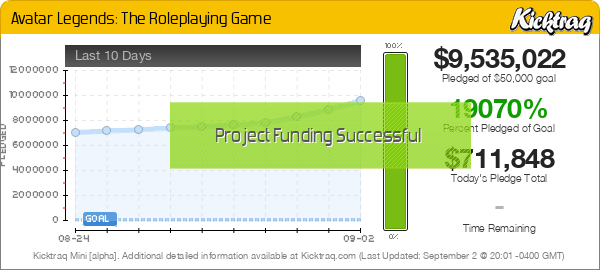
| Date started | Name | Raised CCY | CCY |
Raised USD |
% of goal |
| August 03, 2021 | Avatar Legends: The Roleplaying Game |
9,535,022 |
USD | 9,535,022 | 19.07k% |
| February 11, 2021 |
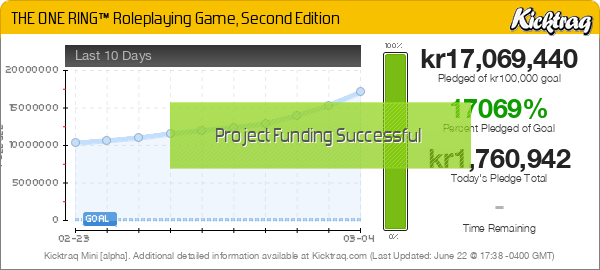
THE ONE RING - Roleplaying Game, Second Edition |
17,069,440 |
SEK | 1,878,628 | 17.06k% |
| November 02, 2021 | Mothership Sci-Fi Horror RPG 1st Edition Boxed Set |
1,405,668 |
USD |
1,405,668 |
7028% |
| March 02, 2021 |
Coyote & Crow the Role Playing Game |
1,073,203 |
USD |
1,073,203 |
5962% |
| November 13, 2021 | CY_BORG | 4,142,971 | SEK | 455,967 | 4101% |
| May 19, 2021 | Into the Mother Lands - An Original Afrofuturist TTRPG | 360,607 | USD | 360,607 | 721% |
| May 27, 2021 |
Exalted: Essence Tabletop Roleplaying Game |
349,260 |
USD |
349,260 |
997% |
| April 27, 2021 |
Ironsworn: Starforged |
347,984 | USD | 347,984 | 2319% |
| July 20, 2021 | The Devil Made Us Do It | 347,215 | USD | 347,215 | 868% |
| June 15, 2021 | Defiant RPG | 293,623 | USD | 293,623 | 543% |
| May 11, 2021 |
Broken Compass: Adventure is Back! |
190,248 | EUR | 215,656 |
1902% |
| March 02, 2021 | A Mending | 190,007 | USD | 190,007 | 1583% |
| September 01, 2021 | Stars Without Number RPG: Offset Print Edition | 189,763 | USD | 189,763 | 948% |
| March 11, 2021 |
The Terminator RPG |
135,008 | GBP | 180,365 | 135% |
| October 20, 2021 | GURPS Girl Genius Roleplaying Game | 172,756 | USD | 172,756 | 1351% |
Want to hear more about the top ttrpg kickstarters above? Listen to Lloyd, Rich and Robert discuss them and more about a possible ‘kickstarter bubble’ in the end of year chat below.


The graph below shows the funding targets for the ttrpgs kickstarted from Dec 20 to Nov 21, showing a small ‘peak’ of ttrpgs looking for higher funding (the highest was $54,000) and a long ‘tail’ of ttrpgs looking with nearly half looking for funding at $2,000 or under. The graphs below split the kickstarters into target funding bands and includes the numbers funded vs not funded or cancelled. While it’s intuitive that the odds of funding being unsuccessful rises as target levels increase, notably 3 out of the 4 projects that ended up funding over $1m were targeted between $10k-$20k. Ever since I got back into ttrpgs as an adult, DriveThruRPG was the biggest ttrpg webstore. In 2018, however, I started hearing about another store called itch.io (primarily an indie video game webstore) which was hosting more and more ttrpgs. Quickly, in terms of quantity of ttrpgs at least, itch surpassed DriveThruRPG (though, because remember I am just counting standalone ttrpgs and not stuff such as adventures, classes, modules, maps, stock art, stock music etc, DriveThruRPG still has far more ttrpg-related products). There are other ttrpg webstores out there, of course; some individual designers and most publishers above a certain size will have their own webstores, however almost all ttrpgs available through these stores will also be listed on either DriveThruRPG or itch. Even without delving into the vagaries of defining ‘what is a ttrpg’, a completely accurate count of standalone ttrpgs released in a time period is impossible. So while the numbers below are specific, they are still only intended as an estimate. The below table shows an estimate of standalone ttrpgs released in the 12 months to end November 2021.
Based on sampling, I estimate around 7% (230) of this total are dual-listings and so a more likely estimate of standalone ttrpgs is 2,971
This number is still likely an overestimate as some ttrpgs release quickstarts, playtest or beta versions, which The RPG Pipeline counts as separate ttrpgs. For comparison, however, in 2019 using similar methodology, I estimated 1,838 ttrpgs released. The graph below shows some rough estimates of the number of ttrpgs released on each site since May 2019. I have separated out free and paid products for each site to help provide further insight. Note that Pay-Want-You-Want (PWYW) releases on DriveThruRPG appear at their suggested price rather than as free (therefore undercounting the DTRFree and overcounting the DTRPaid lines). So the good news for roleplayers is that there’s even more free content out there than this graph suggests! Want to hear more about this graph? Listen to Lloyd, Rich and Robert discuss these numbers and DriveThruRPG and itch in the end of year chat below. Another trend this year has been ttrpgs being sold as boxed games rather than books. These aren’t your regular starter sets any more. Listen to Lloyd, Rich and Robert discuss them (very tiredly) at the end of the end of year chat below. One of my big limitations with any kind of market analysis is that there’s very little public data on how well individual ttrpgs sell. TTRPG sales are an iceberg (my thanks to Matt Saunders for that analogy as well as his other thoughts on a draft version of this doc). Copies of ttrpgs sold through initial crowdfunding or handed out as patreon rewards won’t appear in the rankings for DriveThru or itch. Many publishers make the bulk of their sales either through their own webstores or in-person at conventions which are again hidden here. I present the data below as the only comparative data I have, but please be sure to take it as what it is and look to draw broader conclusions. DriveThruRPG operates a tiered band (referred to as metal rankings) and have also released their 2021 top selling products. Not all products are standalone games, however, and so I’ve picked out those that are and which reached at least Gold level (501+ sales). Be aware, of course, that DriveThruRPG is only one sales channel and that many of ttrpgs make some or most of their sales through crowdfunding or direct sales. As far as I know, itch does not publicly release sales data for individual projects. The best proxy I have is the new ttrpgs in the Physical Games Top Sellers list. This, however, favours products that have been released more recently and so will underrepresent big selling ttrpgs from earlier in the year. However, it’s what we have. Again, this table is just those ttrpgs released in 2021 that are high in the itch physical top sellers at the end of the year. What's Hot in Indie TTRPGs 2021 is produced by Epistolary Richard with data provided freely by The RPG Pipeline, Kicktraq, DriveThruRPG and itch.io and is used for the purpose of education and commentary. The opinions expressed are each contributor's own and are not necessarily held or endorsed by anyone involved in the production of this document.

TTRPGs kickstarter funding targets 2021
(back to top)


Target band
Projects
Funded
Not funded/ cancelled
<=$5k
198
178
20
$6k-$10k
51
43
8
$11k-$20k
40
30
10
>=$21k
26
15
11
TTRPGs released in 2021
(back to top)
TTRPGs released by webstore (DriveThruRPG & itch)
(back to top)
Dec'20 to Nov'21
DriveThruRPG
itch.io
Total
TTRPGs released
869
2,332
3,201

TTRPGs ‘in a box’
DriveThruRPG’s 2021 releases bestsellers
(back to top)
Fantasy
Publisher / (Designer)
Sales tier
Worlds Without Number
Sine Nomine Publishing (Kevin Crawford)
2,501-5,000 (Mithral)
Whitehack Third Edition
(Christian Mehrstam)
1,001-2,500 (Platinum)
Pathfinder® for Savage Worlds Core Rules
Pinnacle Entertainment
501-1000 (Gold)
Family
Wanderhome
Possum Creek Games (Jay Dragon)
501-1000 (Gold)
SciFi
Dune - Adventures in the Imperium – Core Rulebook Standard Edition
Modiphius
2,501-5,000 (Mithral)
Fallout: The Roleplaying Game Core Rulebook PDF
Modiphius
1,001-2,500 (Platinum)
SCP The Tabletop RPG
26 Letter (Jason Keech)
1,001-2,500 (Platinum)
Historical, Horror
BLASTER: Volume 3
BLASTER
1,001-2,500 (Platinum)
The Between
The Gauntlet (Jason Cordova)
501-1000 (Gold)
Misc
Sentinel Comics: The Roleplaying Game Core Rulebook
Greater Than Games
501-1000 (Gold)
Prowlers & Paragons Ultimate Edition
Evil Beagle Games
501-1000 (Gold)
Hard Wired Island
Weird Age Games
501-1000 (Gold)
Thirsty Sword Lesbians
Evil Hat Productions
501-1000 (Gold)
Journey
Graycastle Press
501-1000 (Gold)
itch.io’s 2021 releases bestsellers (as at end December 2021)
(back to top)
TTRPG released in 2021 Publisher / (Designer) Price Tether (Adam Baffoni) $3 Gubat Banwa (Waks) $10 Caltrop Core Titanomachy PWYW CBR+PNK (Emanoel Melo) $6 Bucket of Bolts Mousehole Press (Jack Harrison) $10 Gun & Slinger (Nevyn Holmes) $25 Apothecaria (Anna Blackwell) $13 Wanderhome Possum Creek Games (Jay Dragon) $25