About Bangkok
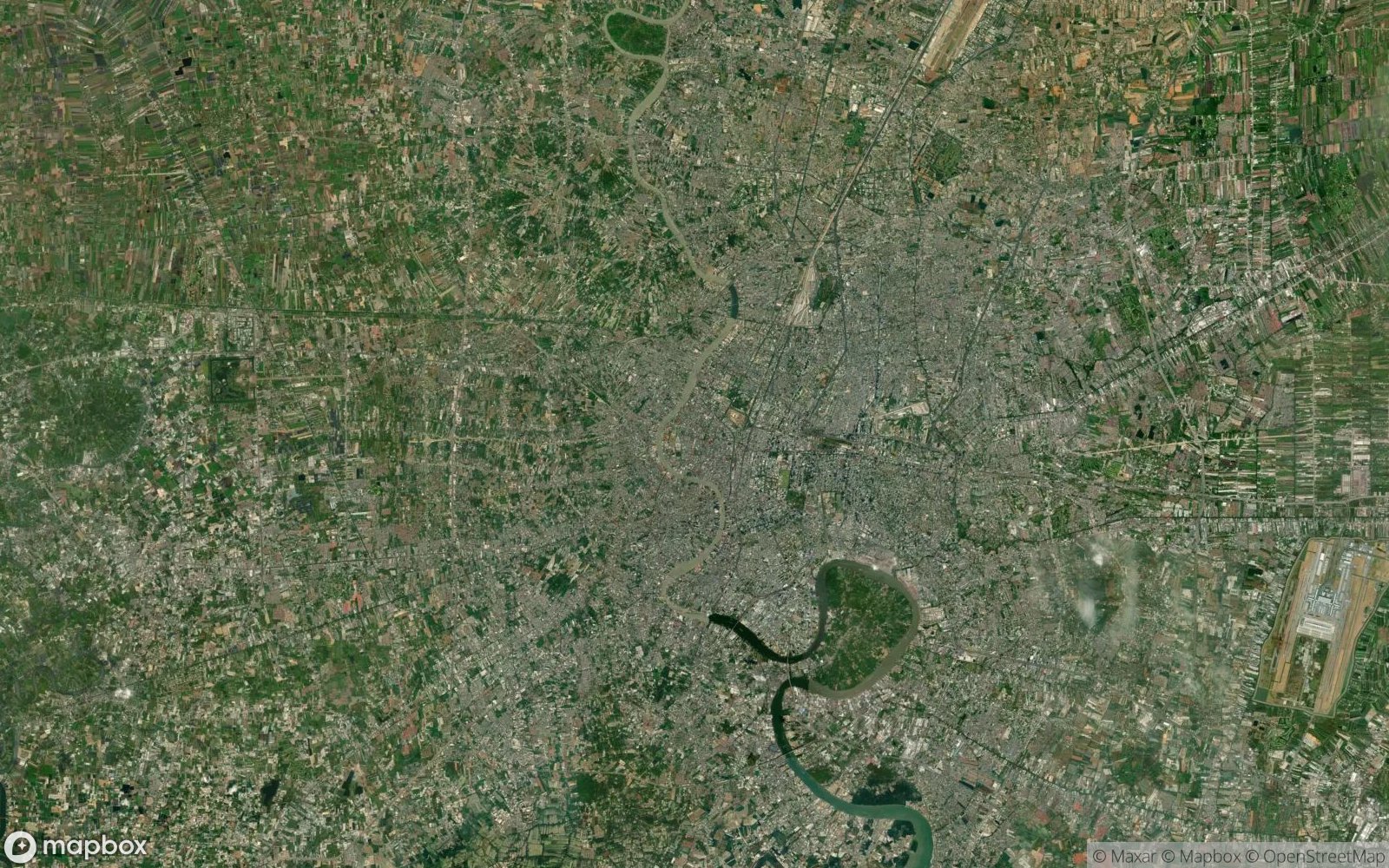
Bangkok, officially known in Thai as Krung Thep Maha Nakhon and colloquially as Krung Thep, is the capital and most populous city of Thailand. The city occupies 1,568.7 square kilometres (605.7 sq mi) in the Chao Phraya River delta in central Thailand and has an estimated population of 11.4 million people as of 2024, 15.9% of the country's population. Over 17.4 million people (25% of Thailand's population) live within the surrounding Bangkok Metropolitan Region as of the 2021 estimate, making Bangkok a megacity and an extreme primate city, dwarfing Thailand's other urban centres in both size and importance to the national economy. Bangkok traces its roots to a small trading post during the Ayutthaya era in the 15th century, which eventually grew and became the site of two capital cities, Thonburi in 1767 and Rattanakosin in 1782. Bangkok was at the heart of the modernization of Siam during the late 19th century, as the country faced pressures from the West. The city was at the centre of the country's political struggles throughout the 20th century, as Siam—later renamed Thailand—abolished absolute monarchy, adopted constitutional rule, and underwent numerous coups and several uprisings. The city, incorporated as a special administrative area under the Bangkok Metropolitan Administration in 1972, grew rapidly during the 1960s through the 1980s and now exerts a significant impact on Thailand's politics, economy, education, media, and modern society. The Asian investment boom in the 1980s and 1990s led many multinational corporations to locate their regional headquarters in Bangkok. The city is now a regional force in finance, business, and pop culture. It is an international hub for transport and health care, and has emerged as a centre for the arts, fashion, and entertainment. The city is known for its street life and cultural landmarks, as well as its red-light districts. The Grand Palace and Buddhist temples, including Wat Arun and Wat Pho, stand in contrast with other tourist attractions such as the nightlife scenes of Khaosan Road and Patpong. Bangkok is among the world's top tourist destinations and has been named the world's most visited city in several international rankings. Bangkok's rapid growth, coupled with little urban planning, has resulted in a haphazard cityscape and inadequate infrastructure. Despite an extensive expressway network, an inadequate road network and substantial private car usage have led to chronic and crippling traffic congestion, which caused severe air pollution in the 1990s. The city has since turned to public transport in an attempt to solve the problem, operating 10 urban rail lines and building other public transit; however, congestion remains a prevalent issue.
The history of Bangkok dates at least back to the early 15th century, to when it was a village on the west bank of the Chao Phraya River, under the rule of Ayutthaya. Because of its strategic location near the mouth of the river, the town gradually increased in importance. Bangkok initially served as a customs outpost with forts on both sides of the river, and was the site of a siege in 1688, in which the French were expelled from Siam. After the fall of Ayutthaya to the Burmese in 1767, the newly crowned King Taksin established his capital at the town, which became the base of the Thonburi Kingdom. In 1782, King Phutthayotfa Chulalok (Rama I) succeeded Taksin, moved the capital to the eastern bank's Rattanakosin Island, thus founding the Rattanakosin Kingdom. The City Pillar was erected on 21 April 1782, which is regarded as the date of the foundation of Bangkok as the capital. Bangkok's economy gradually expanded through international trade, first with China, then with Western merchants returning in the early to mid-19th century. As the capital, Bangkok was the centre of Siam's modernization as it faced pressure from Western powers in the late 19th century. The reigns of Kings Mongkut (Rama IV, r. 1851–68) and Chulalongkorn (Rama V, r. 1868–1910) saw the introduction of the steam engine, printing press, rail transport and utilities infrastructure in the city, as well as formal education and healthcare. Bangkok became the centre stage for power struggles between the military and political elite as the country abolished absolute monarchy in 1932.