About Istanbul
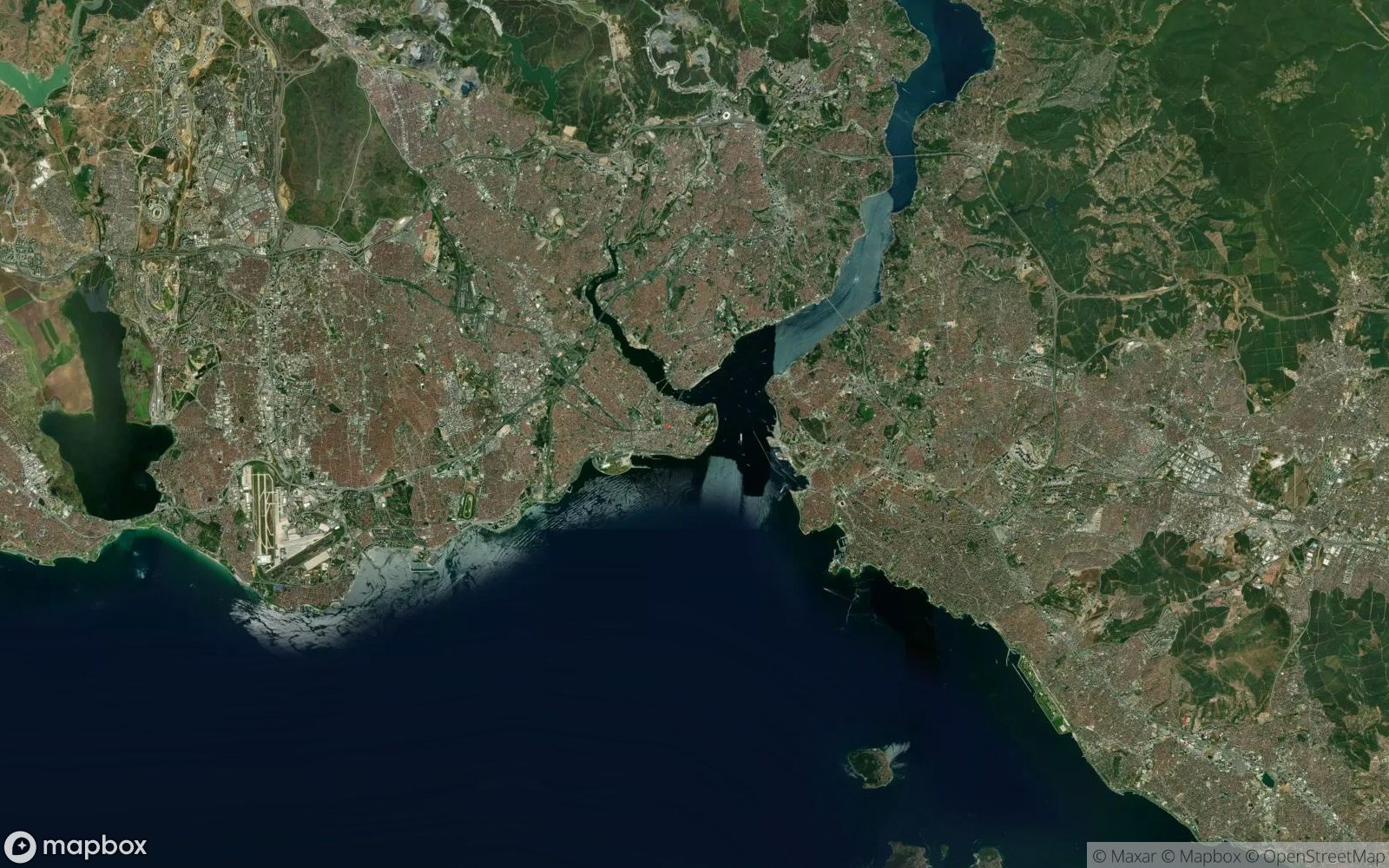
Istanbul is the largest city in Turkey, constituting the country's economic, cultural, and historical heart. With a population over 15 million, it is home to 18% of the population of Turkey. Istanbul is among the largest cities in Europe and in the world by population. It is a city on two continents; about two-thirds of its population live in Europe and the rest in Asia. Istanbul straddles the Bosphorus—one of the world's busiest waterways—in northwestern Turkey, between the Sea of Marmara and the Black Sea. Its area of 5,461 square kilometers (2,109 mi2) is coterminous with Istanbul Province. The city now known as Istanbul developed to become one of the most significant cities in history. Byzantium was founded on the Sarayburnu promontory by Greek colonists, potentially in the seventh century BC. Over nearly 16 centuries following its reestablishment as Constantinople in 330 AD, it served as the capital of three empires: the Roman Empire (later known as the Byzantine Empire, 330–1204 and 1261–1453), the Latin Empire (1204–1261), and the Ottoman Empire (1453–1922). It was instrumental in the advancement of Christianity during Roman and Byzantine times, before the Ottomans conquered the city in 1453 and transformed it into an Islamic stronghold and the seat of the last caliphate. Although the Republic of Turkey established its capital in Ankara, palaces and imperial mosques still line Istanbul's hills as visible reminders of the city's previous central role. The historic centre of Istanbul is a UNESCO World Heritage Site. Istanbul's strategic position along the historic Silk Road, rail networks to Europe and West Asia, and the only sea route between the Black Sea and the Mediterranean have helped foster an eclectic populace, although less so since the establishment of the Republic in 1923. Overlooked for the new capital during the interwar period, the city has since regained much of its prominence. The population of the city has increased tenfold since the 1950s, as migrants from across Anatolia have flocked to the metropolis and city limits have expanded to accommodate them. Most Turkish citizens in Istanbul are ethnic Turks, while ethnic Kurds are the largest ethnic minority. Arts festivals were established at the end of the 20th century, while infrastructure improvements have produced a complex transportation network. Considered an alpha global city, Istanbul accounts for about thirty percent of Turkey's economy. The Istanbul-İzmit area is one of the main industrial regions in Turkey. In 2024, Euromonitor International ranked Istanbul as the second most visited city in the world. Istanbul is home to two international airports, multiple ports, and numerous universities. It is among the top 100 science and technology clusters in the world. The city hosts a large part of Turkish football and sports in general, with clubs such as Galatasaray, Fenerbahçe and Beşiktaş. Istanbul is vulnerable to earthquakes as it is in close proximity to the North Anatolian Fault.
The first known name of the city is Byzantium (Ancient Greek: Βυζάντιον, Byzántion), the name given to it at its foundation by Megarian colonists around 657 BCE. Megarian colonists claimed a direct line back to the founders of the city, Byzas, the son of the god Poseidon and the nymph Ceroëssa. Modern excavations have raised the possibility that the name Byzantium might reflect the sites of native Thracian settlements that preceded the fully-fledged town. Constantinople (Greek: Κωνσταντινούπολις, romanized: Kōnstantinoupolis; Latin: Constantinopoliscode: lat promoted to code: la ) comes from the Latin name Constantinus, after Constantine the Great, the Roman emperor who refounded the city in 324 CE. Constantine had initially called the city New Rome (Ancient Greek: Νέα Ῥώμη; Nea Rhomē; Latin: Nova Roma). Constantinople remained the most common name for the city in the West until the 1930s, when Turkish authorities began to press for the use of Istanbul in foreign languages. Ḳosṭanṭīnīye (Ottoman Turkish: قسطنطينيه) and İstanbul were the names used alternatively by the Ottomans during their rule. The name İstanbul (Ottoman Turkish: استانبول; [isˈtanbuɫ] or colloquially pronounced [ɯsˈtambuɫ]) is commonly held to derive from the Medieval Greek phrase eis tḕn Pólin (εἰς τὴν Πόλιν, pronounced [is tim ˈbolin]), literally "to the city", and is how Constantinople was referred to by the local Greeks. This reflected its status as the only major city in the vicinity. The importance of Constantinople in the Ottoman world was also reflected by its nickname Dersaadet (Ottoman Turkish: درساعدت) meaning the 'Gate to Prosperity' in Ottoman Turkish. An alternative view is that the name evolved directly from "Constantinople", with the first and third syllables dropped. Some Ottoman sources of the 17th century, such as Evliya Çelebi, describe it as the common Turkish name of the time; between the late 17th and late 18th centuries, it was also in official use. The first use of the word Islambol (Ottoman Turkish: اسلامبول) on coinage was in 1730 during the reign of Sultan Mahmud I. In modern Turkish, the name is written as İstanbul, with a dotted İ, as the Turkish alphabet distinguishes between a dotted and dotless I. In English, the stress is on the first or last syllable, but in Turkish it is on the second syllable. A person from the city is an İstanbullu (plural İstanbullular); Istanbulite is used in English.