About Moscow
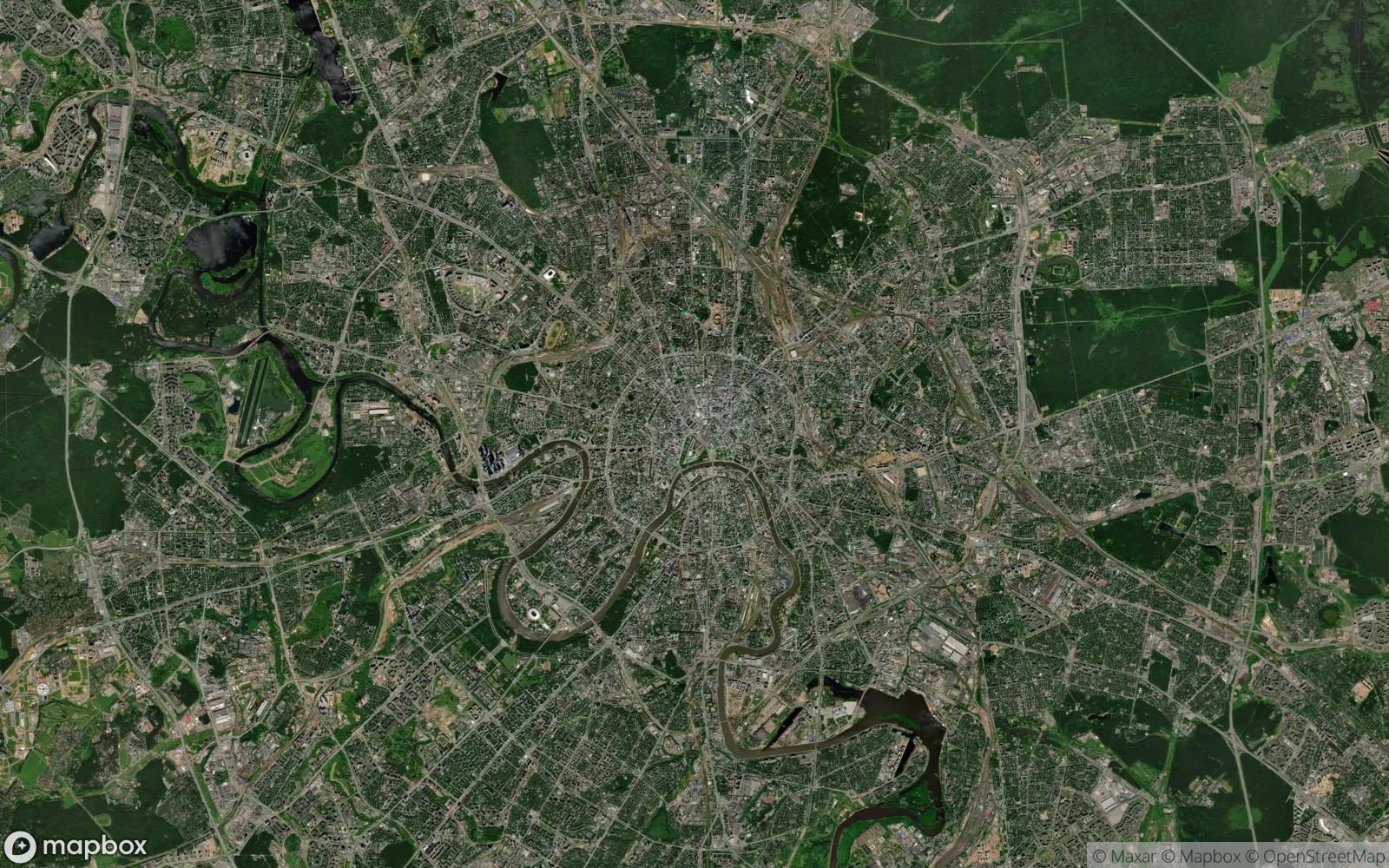
Moscow is the capital and largest city of Russia, standing on the Moskva River in Central Russia. It has a population estimated at over 13 million residents within the city limits, over 19.1 million residents in the urban area, and over 21.5 million residents in its metropolitan area. The city covers an area of 2,511 square kilometers (970 mi2), while the urban area covers 5,891 square kilometers (2,275 mi2), and the metropolitan area covers over 26,000 square kilometers (10,000 mi2). Moscow is among the world's largest cities, being the most populous city entirely in Europe, the largest urban and metropolitan area in Europe, and the largest city by land area on the European continent. First documented in 1147, Moscow became the capital of the Grand Principality of Moscow, which led the unification of the Russian lands in the 15th century and became the center of a unified state. Following the proclamation of the Tsardom of Russia in 1547, Moscow remained the political and economic center for most of its history. During the reign of Peter the Great, the Russian capital was moved to the newly founded city of Saint Petersburg in 1712, leading to a decline in Moscow's importance throughout the imperial period. Following the Russian Revolution and the establishment of the Russian SFSR, the capital was moved back to Moscow in 1918. The city later became the political center of the Soviet Union and experienced significant population growth throughout the Soviet period. In the aftermath of the dissolution of the Soviet Union, Moscow remained the capital city of the newly reconstituted Russian Federation and has experienced continued growth. The northernmost and coldest megacity in the world, Moscow is governed as a federal city, where it serves as the political, economic, cultural, and scientific center of Russia and Eastern Europe. Moscow has one of the world's largest urban economies. Moscow has the second-highest number of billionaires of any city (tied with Hong Kong). The Moscow International Business Center is one of the largest financial centers in the world and features the majority of Europe's tallest skyscrapers. Moscow was the host city of the 1980 Summer Olympics and one of the host cities of the 2018 FIFA World Cup. The city contains several UNESCO World Heritage Sites and is known for its disPlay of Russian architecture, particularly in areas such as Red Square and buildings such as Saint Basil's Cathedral and the Moscow Kremlin, the latter of which is the seat of power of the Government of Russia. Moscow is home to Russian companies in different industries and is served by a comprehensive transit network, which includes four international airports, ten railway terminals, a tram system, a monorail system, and the Moscow Metro, which is the busiest metro system in Europe and one of the largest rapid transit systems in the world. The city has over 40 percent of its territory covered by greenery, making it one of the greenest cities in the world.
The city's name is thought to be derived from the Moskva River. Theories of the origin of the name of the river have been proposed. The most linguistically well-grounded and widely accepted is from the Proto-Balto-Slavic root *mŭzg-/muzg- from the Proto-Indo-European *meu- "wet", so the name Moskva might signify a river at a wetland or marsh. Its cognates include Russian: музга, muzga "pool, puddle", Lithuanian: mazgoti and Latvian: mazgāt "to wash", Sanskrit: májjati "to drown", Latin: mergō "to dip, immerse", Prekmurian müzga "marsh, swamp." In many Slavic countries Moskov is a surname, most common in Russia, Bulgaria, Ukraine and North Macedonia. Additionally, there are similarly named places in Poland like Mozgawa. According to a Finno-Ugric hypothesis, the Merya and Muroma people, who were among the pre-Slavic tribes which inhabited the area, called the river Mustajoki "Black river", and the name of the river derives from this term. Other theories, having little or no scientific basis, are rejected by linguists. The Old Russian form of the name is reconstructed as *Москы, *Mosky, hence it was one of a few Slavic ū-stem nouns. As with other nouns of that declension, it had been undergoing a morphological transformation at the early stage of the development of the language, as a result, the first written references in the 12th century were Московь, Moskovĭ (accusative case), Москви, Moskvi (locative case), Москвe/Москвѣ, Moskve/Moskvě (genitive case). From the latter forms came the modern Russian form Москва, Moskva, which is a result of morphological generalization with the numerous Slavic ā-stem nouns. The form Moskovĭ has left traces in other languages, including English: Moscow; German: Moskau; French: Moscou; Portuguese: Moscou, Moscovo; and Spanish: Moscú. Moscow has acquired epithets, such as the "third Rome". Moscow is one of twelve Hero Cities. The demonym for a Moscow resident is rendered as Muscovite in English.