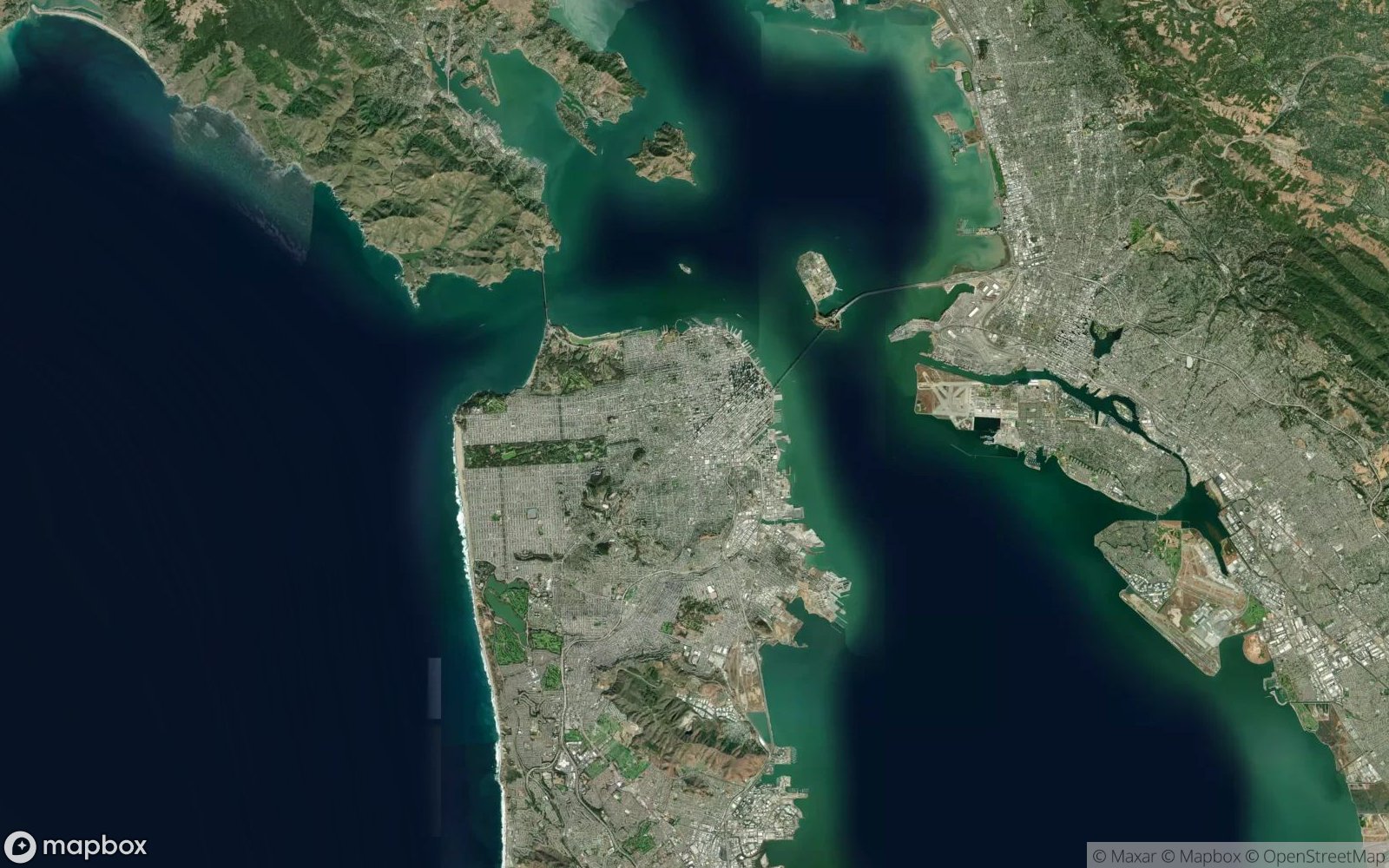
About San Francisco
San Francisco, officially the City and County of San Francisco, is a commercial, financial, and cultural center of Northern California. With an estimated population of 827,526 residents as of 2024, San Francisco proper is the fourth-most populous city in the U.S. state of California and the 17th-most populous in the United States. Among U.S. cities proper with over 300,000 residents, San Francisco is ranked second by population density, first by per capita income, and sixth by aggregate income as of 2023. Depending on how its borders are defined, the broader San Francisco Bay Area is home to 4.6–9.2 million residents. In 2024, the U.S. Census Bureau reported an estimated population of 4,648,486 for the city's metropolitan statistical area (13th-largest in the U.S.) and 9,164,058 residents for the larger combined statistical area (5th-largest). Prior to European settlement, the modern city proper was inhabited by the Yelamu Ohlone. On June 29, 1776, settlers from New Spain established the Presidio of San Francisco at the Golden Gate, and the Mission San Francisco de Asís a few miles away, both named for Francis of Assisi. The California gold rush of 1849 brought rapid growth, making it the largest city on the West Coast at the time. In 1856, San Francisco became a consolidated city-county. After three-quarters of the city was destroyed by the 1906 earthquake and fire, it was quickly rebuilt, hosting the Panama–Pacific International Exposition nine years later. In World War II, it was a major port of embarkation for naval service members shipping out to the Pacific Theater. After the war, the confluence of returning servicemen, significant immigration, liberalizing attitudes, the rise of the beatnik and hippie countercultures, the sexual revolution, opposition to U.S. involvement in the Vietnam War, and other factors led to the Summer of Love and the gay rights movement, cementing San Francisco as a center of liberal activism. San Francisco and the surrounding San Francisco Bay Area are a global center of economic activity and the arts and sciences, spurred by leading universities, high-tech, healthcare, finance, insurance, real estate, and professional services sectors. As of 2020, the metropolitan area, with 4.5 million residents, ranked 5th by GDP ($874 billion) and 2nd by GDP per capita ($131,082) across the OECD countries. In 2023, San Francisco proper had a GDP of $263.1 billion and a GDP per capita of $325,000. The city is home to numerous companies—many in the technology sector—including Salesforce, Uber, Airbnb, OpenAI, Levi's, Gap, Dropbox, and Lyft. In 2022, San Francisco had more than 1.7 million international visitors and approximately 20 million domestic visitors. It is known for its steep rolling hills and eclectic mix of architecture across varied neighborhoods; its Chinatown and Mission districts; mild climate; and landmarks including the Golden Gate Bridge, cable cars, and Alcatraz. The city is home to educational and cultural institutions such as the University of California, San Francisco, the University of San Francisco, San Francisco State University, the San Francisco Conservatory of Music, the Legion of Honor, the de Young Museum, the San Francisco Museum of Modern Art, the San Francisco Symphony, the San Francisco Ballet, the San Francisco Opera, the SFJAZZ Center, and the California Academy of Sciences. Two major league sports teams, the San Francisco Giants and the Golden State Warriors, Play their home games within San Francisco. San Francisco International Airport (SFO) is one of the world's busiest airports, while a light rail and bus network, in tandem with the BART and Caltrain systems, connects nearly every part of San Francisco with the wider region.
San Francisco, which is Spanish for "Saint Francis", takes its name from Mission San Francisco de Asís, which in turn was named after Saint Francis of Assisi. The mission received its name in 1776, when it was founded by the Spanish under the leadership of Padre Francisco Palóu. The city has officially been known as San Francisco since 1847, when Washington Allon Bartlett, then serving as the city's alcalde, renamed it from Yerba Buena (Spanish for "Good Herb"), which had been the name of the first civilian pueblo in San Francisco. Earlier in San Francisco's history, the uninhabited area on the northeastern side of San Francisco was called El Paraje de Yerba Buena, after the herb that was growing abundantly there. The name Yerba Buena continues to be used in locations in the city, such as on Yerba Buena Island. When using a nickname or abbreviation, local residents most commonly refer to San Francisco as "the City" or "SF." Although the nickname "Frisco" has a local pedigree dating at least to 1850 and has been used by some local residents in every generation since then, the uses of both "Frisco" and the historically more recent "San Fran" tend to elicit sharp divisions among residents. The California Cantonese who came for the California Gold Rush named California and specifically San Francisco 金山, Gāmsāan, "Gold Mountain". When gold was discovered in Bendigo, Victoria, Australia, it was named "New Gold Mountain" (Yue Chinese: 新金山, Sān Gāmsāan) and California and San Francisco as "Old Gold Mountain" (舊金山, Gāu Gāmsāan).