About Singapore
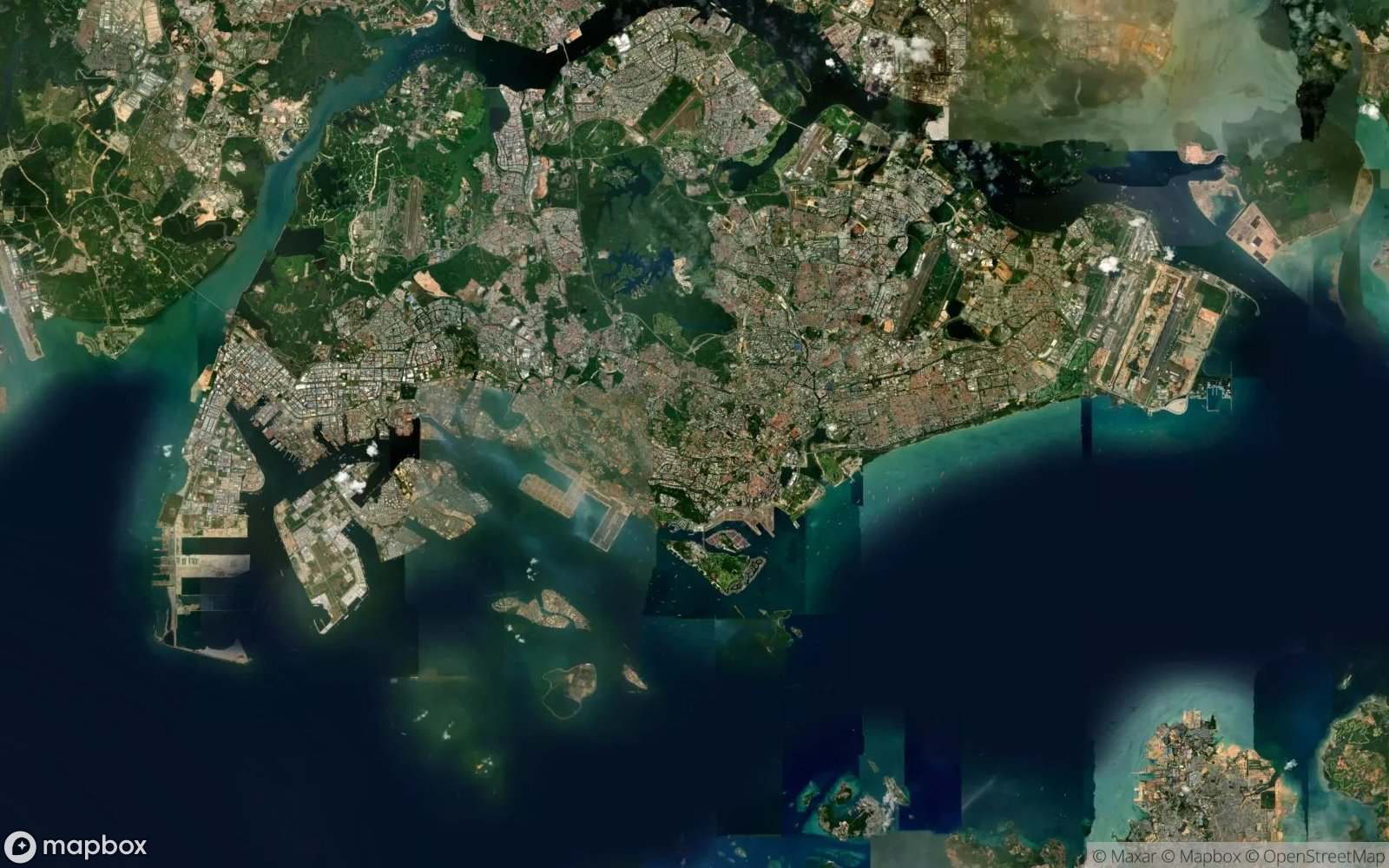
Singapore, officially the Republic of Singapore, is an island country and city-state in Southeast Asia. Its territory comprises one main island, 63 satellite islands and islets, and one outlying islet. The country is about one degree of latitude (137 kilometres or 85 miles) north of the equator, off the southern tip of the Malay Peninsula, bordering the Strait of Malacca to the west, the Singapore Strait to the south along with the Riau Islands in Indonesia, the South China Sea to the east and the Straits of Johor along with the State of Johor in Malaysia to the north. In its early history, Singapore was a maritime emporium known as Temasek; subsequently, it was a major constituent of several successive thalassocratic empires. Its contemporary era began in 1819, when Stamford Raffles established Singapore as an entrepôt trading post of the British Empire. In 1867, Singapore came under direct British control as part of the Straits Settlements. During World War II, Singapore was occupied by Japan in 1942 and returned to Britain as a Crown colony following Japan's surrender in 1945. Singapore gained self-governance in 1959 and in 1963 became part of the new federation of Malaysia, alongside Malaya, North Borneo and Sarawak. Ideological differences led to Singapore's expulsion from the federation two years later; it became an independent sovereign country in 1965. After early years of turbulence and despite lacking natural resources and a hinterland, the nation rapidly developed to become one of the Four Asian Tigers. As a highly developed country, Singapore has the highest PPP-adjusted GDP per capita in the world and is the only country in Asia with a AAA sovereign credit rating from all major rating agencies. Identified as a tax haven, it is a major aviation, financial and maritime shipping hub and has consistently been ranked as one of the most expensive cities for expatriates and foreign workers. Singapore ranks highly in key social indicators: education, healthcare, housing, peacefulness, passport strength, personal safety and infrastructure, with a high home-ownership rate. Singaporeans enjoy one of the longest life expectancies, fastest Internet connection speeds, lowest infant mortality rates and lowest levels of corruption in the world. Singapore is organised into five regions, 55 planning areas and hundreds of subzones. It has the third highest population density of any country, although there are numerous green and recreational spaces as a result of urban planning. With a multicultural population and in recognition of the cultural identities of the country's major ethnic groups, Singapore has four official languages: English, Malay, Mandarin and Tamil. English is the common language, with exclusive use in numerous public services. Multi-racialism is enshrined in the constitution and continues to shape national policies. Singapore is a parliamentary republic and its legal system is based on common law. While it is constitutionally a multi-party democracy where free elections are regularly held, it functions as a de facto one-party state, with the People's Action Party (PAP) maintaining continuous political dominance since 1959. The PAP's longstanding control has resulted in limited political pluralism and a highly centralised governance structure over national institutions. One of the five founding members of ASEAN, Singapore is also the headquarters of the Asia-Pacific Economic Cooperation Secretariat, the Pacific Economic Cooperation Council Secretariat and is the host city of many international conferences and events. Singapore is also a member of the United Nations, the World Trade Organization, the East Asia Summit, the Non-Aligned Movement and the Commonwealth of Nations.
The English name of "Singapore" is an anglicisation of the native Malay name for the country, Singapura (Malay pronunciation: [siŋapura] ), which was in turn derived from the Sanskrit word for 'lion city' (Sanskrit: सिंहपुर; romanised: Siṃhapura; Brahmi: 𑀲𑀺𑀁𑀳𑀧𑀼𑀭; literally "lion city"; siṃha means 'lion', pura means 'city' or 'fortress'). Pulau Ujong was one of the earliest references to Singapore Island, which corresponds to a Chinese account from the third century referred to a place as Pú Luó Zhōng (Chinese: 蒲 羅 中), a transcription of the Malay name for 'island at the end of a peninsula'. Early references to the name Temasek (or Tumasik) are found in the Nagarakretagama, a Javanese eulogy written in 1365, and a Vietnamese source from the same time period. The name possibly means Sea Town, being derived from the Malay tasek, meaning 'sea' or 'lake'. The Chinese traveller Wang Dayuan visited a place around 1330 named Danmaxi (Chinese: 淡馬錫; pinyin: Dànmǎxí; Wade–Giles: Tan Ma Hsi) or Tam ma siak, depending on pronunciation; this may be a transcription of Temasek, alternatively, it may be a combination of the Malay Tanah meaning 'land' and Chinese xi meaning 'tin', which was traded on the island. Variations of the name Siṃhapura were used for a number of cities throughout the region prior to the establishment of the Kingdom of Singapura. In Hindu–Buddhist culture, lions were associated with power and protection, which may explain the attraction of such a name. The name Singapura supplanted Temasek sometime before the 15th century, after the establishment of the Kingdom of Singapura on the island by a fleeing Sumatran Raja (prince) from Palembang. However, the precise time and reason for the name change is unknown. The semi-historical Malay Annals state that Temasek was christened Singapura by Sang Nila Utama, a 13th-century Sumatran Raja from Palembang. The Annals state that Sang Nila Utama encountered a strange beast on the island that he took to be a lion. Seeing this as an omen, he established the town of Singapura where he encountered the beast. The second hypothesis, drawn from Portuguese sources, postulates that this mythical story is based on the real life Parameswara of Palembang. Parameswara declared independence from Majapahit and mounted a Lion Throne. After then being driven into exile by the Javanese, he usurped control over Temasek. He may have rechristened the area as Singapura, recalling the throne he had been driven from. Under Japanese occupation, Singapore was renamed Syonan-to (Japanese: 昭 南, Hepburn: Shōnan), meaning 'light of the south'. Singapore is sometimes referred to by the nickname the "Garden City", in reference to its parks and tree-lined streets. Another informal name, the "Little Red Dot", was adopted after an article in the Asian Wall Street Journal of 4 August 1998 said that Indonesian President B. J. Habibie referred to Singapore as a red dot on a map.